
Who Gets to Be Egyptian?
A personal and historical essay on how Egyptian identity was built, narrowed, and enforced—traced through one family across five generations.

Identities feel oldest when they are newest, and most permanent when we forget how they were made.
PART I: A WORLD WITHOUT BOUNDARIES
The Jewish Quarter
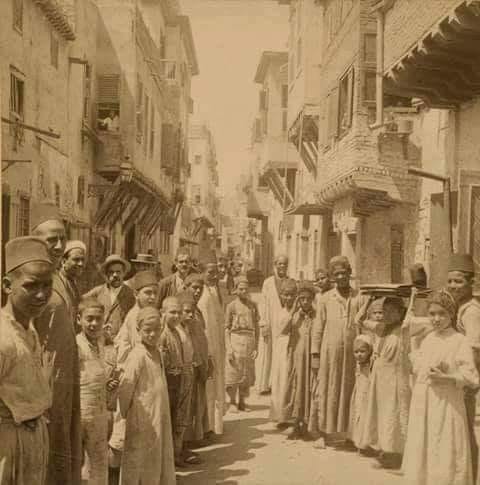
My great-great grandmother on my mother’s side, Abda Abd El-Fattah Dadour—known to everyone as Umm Lolly—lived in a neighborhood in Alexandria that most people today have either forgotten or remember only as a footnote. The Manshiyya area near the port was not a place of grandeur. It was crowded and loud with commerce. Streets narrow enough that neighbors could pass food between windows. The Mediterranean smell must have been constant. This was the Alexandria of daily life.
And in that daily life, Umm Lolly's neighbors were Jewish.
This is not a fact she recorded anywhere. It is not in any archive. It comes down through the kind of transmission that family history usually relies on: someone told someone, who told someone, who eventually told me. But the details are specific enough to have the texture of lived truth rather than legend. She attended Jewish holidays. She went to Jewish funerals—not out of political solidarity or interfaith programming, but because funerals are what neighbors do, what proximity makes natural. She maintained a friendship with one Jewish neighbor even after both had moved away from that street, carrying their connection across the city the way people carry habits formed before they understand those habits might one day seem remarkable.
There is also a word she used, passed down with the story: Ṣla. She used it to refer to a prayer space in the home—a word her Jewish neighbors used for their own prayer spaces, which had migrated into her Arabic vocabulary the way words migrate when people live close enough together. The word itself is an artifact of that world.
What I want to resist is the temptation to name this "tolerance." That word carries too much of the contemporary liberal's relief at finding historical precedent for coexistence. Tolerance implies a conscious effort, a decision made in the face of discomfort. What Umm Lolly's world had was something both simpler and more profound: the absence of a framework that would have required tolerance in the first place. You do not tolerate what you have not yet learned to think of as foreign.
The point is not that nobody noticed difference. Of course they noticed. A Jewish funeral is not a Muslim funeral. But difference had not yet been reorganized into the hierarchies of national belonging and exclusion that would later make such coexistence seem like an anomaly.

My family's archive is largely a memory archive rather than a document archive. On my mother's side, the chain runs: Ahmad (born 1914), son of Abu al-Qassem, son of Ahmad, son of Ali, son of Farghoul. No birth certificates. No centralized documentation in the modern sense—not until the Nasser era in the 1950s. What they had instead were other forms of proof. Photographs of the shop’s owner and his father hung above the door or on the staircase landing. This was ownership. The photographs functioned as a pre-bureaucratic identity document: proof that your presence was continuous and recognized by everyone who climbed those stairs.
Belonging was not a file in an archive. It was a fact recognized by neighbors.
In the early 2000s, one of my mother's uncles met a Jewish man who had returned to Alexandria from Switzerland. The man was looking for his father's photograph. His family had been expelled in 1956 and he had grown up in exile with fragments of memories of Egypt. He had returned, decades later, not to reclaim property or pursue legal redress, but simply to find a trace of his father in a city that no longer held him officially, that had excised him from its registers, but that might still hold him socially, in an image hung somewhere over a door.
The law moves very fast. It can reclassify you overnight, strip your citizenship by decree, declare your property sequestered by administrative fiat. The social world—photographs, neighborhoods, memories, friendships—moves more slowly. It outlasts the law for a time.
And then it fades too.
I grew up going to Egypt every summer. I watched Egyptian films in theaters, absorbed Egypt as family—my grandparents' apartment, the Mediterranean sea, a culture that was mine but also not quite mine, since I had grown up in America and had interests that Egyptians could never quite understand. I was inside and outside at once, and for a long time I thought this was simply my personal situation, a quirk of biography.
It took me years to understand that it was also a historical situation. That the category I was standing awkwardly outside of had itself been constructed, contested, narrowed, and enforced over the course of the century my grandparents had lived through. That Egyptian identity was not an ancient essence I had failed to fully inherit, but a historical product assembled out of law, language, labor policy, political violence, and a great deal of forgetting.
I inherited Egypt before I understood it. What follows is the account of trying to understand it after.
My central question is simple to state and difficult to answer: what makes an Egyptian? The question seems obvious until you press it. Is it religion? Language? Village origin? Legal nationality? A father's papers? A neighborhood? A story a family tells about itself across generations?
My own family, contained within a single genealogy, already demonstrates that none of these criteria is sufficient. On one side: village Islamic prestige, Azhar-trained ancestors, the slow movement from fellah (farmer) to effendi (gentleman) across several generations of Egyptian modernity. On the other: life in Jewish Alexandria, possible Turkish ancestry, a lineage claim tracing back through Morocco and Arabia. Then Nasser-era upward mobility. Then emigration. Then American racial recoding. And now, a son, born in America, for whom being Egyptian may be the faintest part of his identity.
If Egyptian identity were a natural essence, my family would make no sense. The fact that we are recognizably one family with one history suggests that Egyptian identity was something different: assembled gradually until what had once been a layered social reality was slowly narrowed into a state-managed category.
Belonging Without Papers
The world Umm Lolly lived in was the structure of Egyptian society before the nation-state had finished constructing itself. To understand why her world was possible, you have to understand the system that made it ordinary.
That system was Ottoman. The Ottoman Empire did not organize its population the way modern nation-states do. It governed difference rather than resolving it. A person living in Alexandria in the late 1800s could be, simultaneously: an Ottoman subject, a resident of a particular neighborhood, a Muslim or Christian or Jew under the relevant religious community's jurisdiction, a member of a specific trade network, and possibly someone under the formal legal protection of a European consulate. None of these categories canceled the others. They overlapped, reinforced, and sometimes contradicted one another, and the system accommodated this because it had to. The empire encompassed far too much difference to simplify it away.
The legal categories that mattered were not organized around a single national identity. An Ottoman subject was defined by paternal descent and imperial affiliation, but this coexisted with the protected foreigner—someone backed by a European consulate, subject to consular rather than local courts. It coexisted with the ahli, the local resident without foreign protection, who was technically more embedded in Egyptian society but in practice more vulnerable to taxation and conscription. It coexisted with the dhimmi—the non-Muslim subject under Islamic law, whose status was different from a Muslim's but who was, in principle, protected within the imperial order.
The counterintuitive fact that this system produces is that being "local"—embedded in Egyptian society without foreign protection—was often not a privilege but a vulnerability.
The foreigner, paradoxically, could be more protected than the native. A Greek merchant in Alexandria who maintained their Greek passport could use Greek consular courts, avoid local taxation, and enjoy legal standing that a Muslim Egyptian of similar wealth could not access. A Jewish family with French or Italian protection could insulate itself from local commercial law. Foreignness, in the Ottoman and early colonial order, was frequently a resource rather than a disability.
Before that inversion, identity was thick, local, and socially recognized. The genealogy I traced earlier—Ahmad, son of Abu al-Qassem, son of Ahmad, son of Ali, son of Farghoul—existed and was known not because it was registered anywhere, but because it was remembered. The photographs above the door. The family network. The neighborhood that knew your name.
This matters because one of the central dramas of modern Egyptian identity is precisely the replacement of remembered belonging with documented belonging. The modern state required that identity be written down, certified, verified, and stamped. Birth certificates. Nationality papers. Proof of residence. The administrative apparatus of modern governance depends on its ability to see, classify, and manage its population. The social world of photographs over doors and neighborhood recognition was illegible to the modern state, which is part of why the transition to documented identity was so disruptive.
My maternal family’s lack of birth certificates was not unusual. It was the norm for people of their class and background. But it meant that when the state began to require documentation as the price of belonging, they were starting from a position of vulnerability—not because they were not Egyptian in any meaningful social sense, but because they lacked the papers that the state had decided would define that social sense going forward.
The event that made all of this necessary was the collapse of the Ottoman Empire. An Ottoman subject living in Alexandria in 1913 had a legal and social identity that was intelligible, however complex. By 1923—after the end of World War I, the British Protectorate, Egyptian nominal independence, and the Treaty of Lausanne—that identity had been dissolved, and a new set of categories had to be erected in its place.
The question the collapse produced was administrative: who, now, was what? The person who had been an Ottoman subject living in Egypt—were they Egyptian? Turkish? Syrian? Stateless? The answer depended on decisions being made simultaneously by multiple governments, often inconsistent, unclear, and practically very difficult to navigate. If you were educated with resources and connections, you could probably figure out how to register yourself. If you were poor, illiterate, or simply unaware that registration was required, you might fall through entirely.
My Moroccan ancestor understood this problem from the other end. The chain runs something like this: a man tracing his origins to Morocco, moving through Tunisia, through Syria, into Egypt—the kind of trajectory entirely normal under Ottoman imperial mobility, where movement across what we now call national borders was structured by commercial networks, religious pilgrimages, and family connections rather than passports and entry permits. Under empire, he simply moved. Under the nation-state, he had to be sorted.
The modern Egyptian state did not simply recognize who belonged. It required people to prove that they belonged—and not everyone could.
The question was not yet "Who is really Egyptian?" but "Under whose authority do you live, and with whom do you share daily life?" The answer to the first question was multiple and layered. The answer to the second was the neighborhood—Umm Lolly's street, the Jewish quarter of Manshiyya, the tram routes and market stalls and funeral processions that organized Alexandrian social space.
What the modern state would do, over the following decades, is replace that answer with a single legal one. Nationality would determine not just legal standing but economic survival, social respectability, and eventually the right to remain.
The Invention of the Egyptian
Once belonging had to be defined, the question became political: who counts as Egyptian?
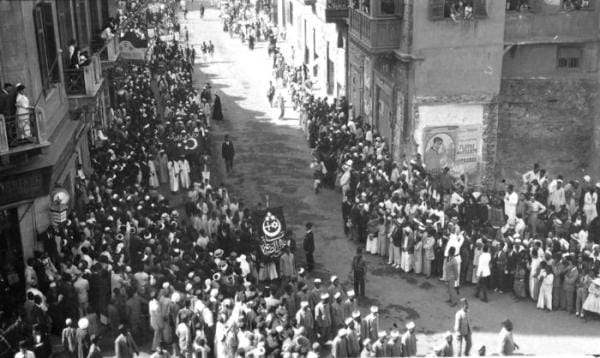
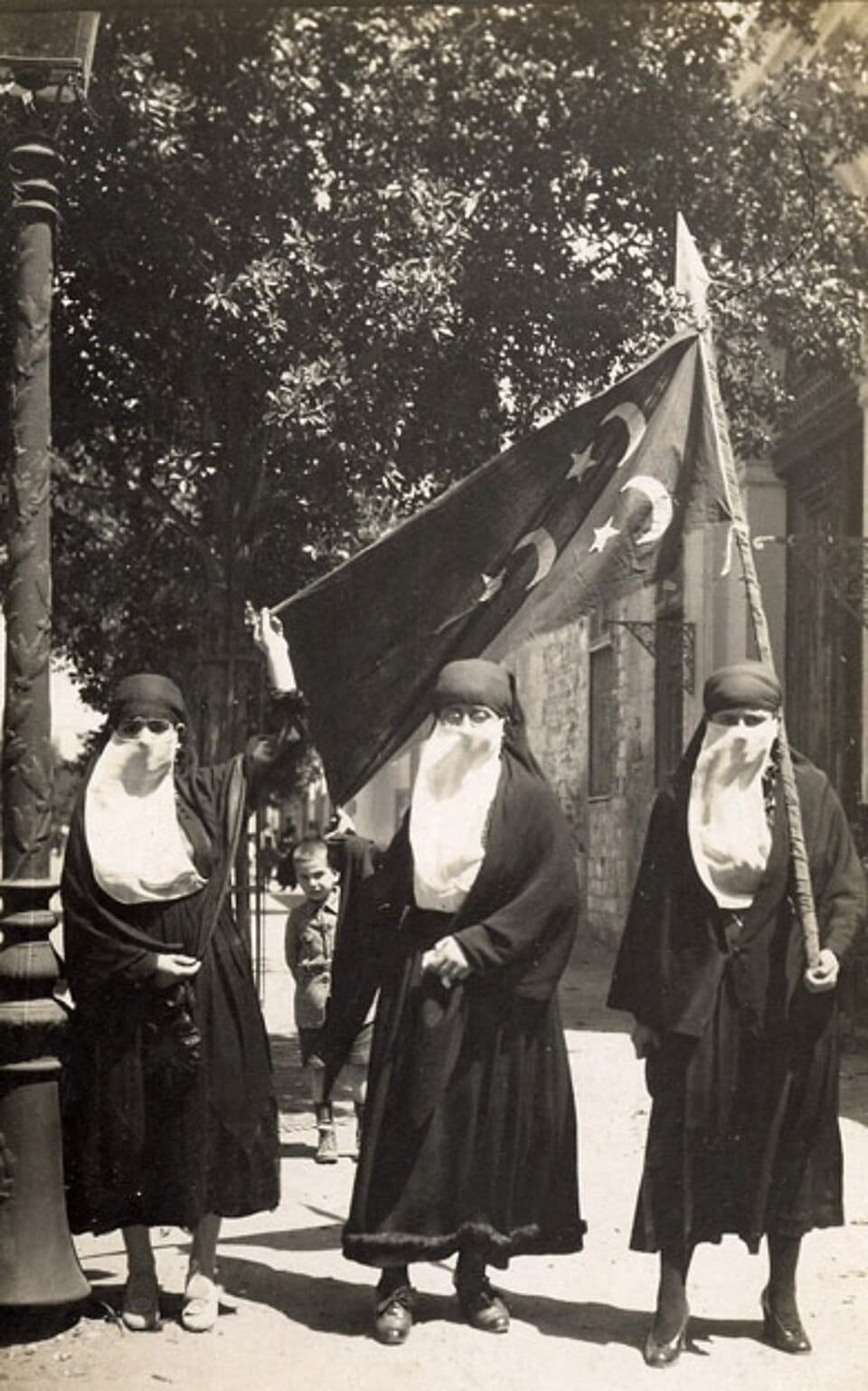
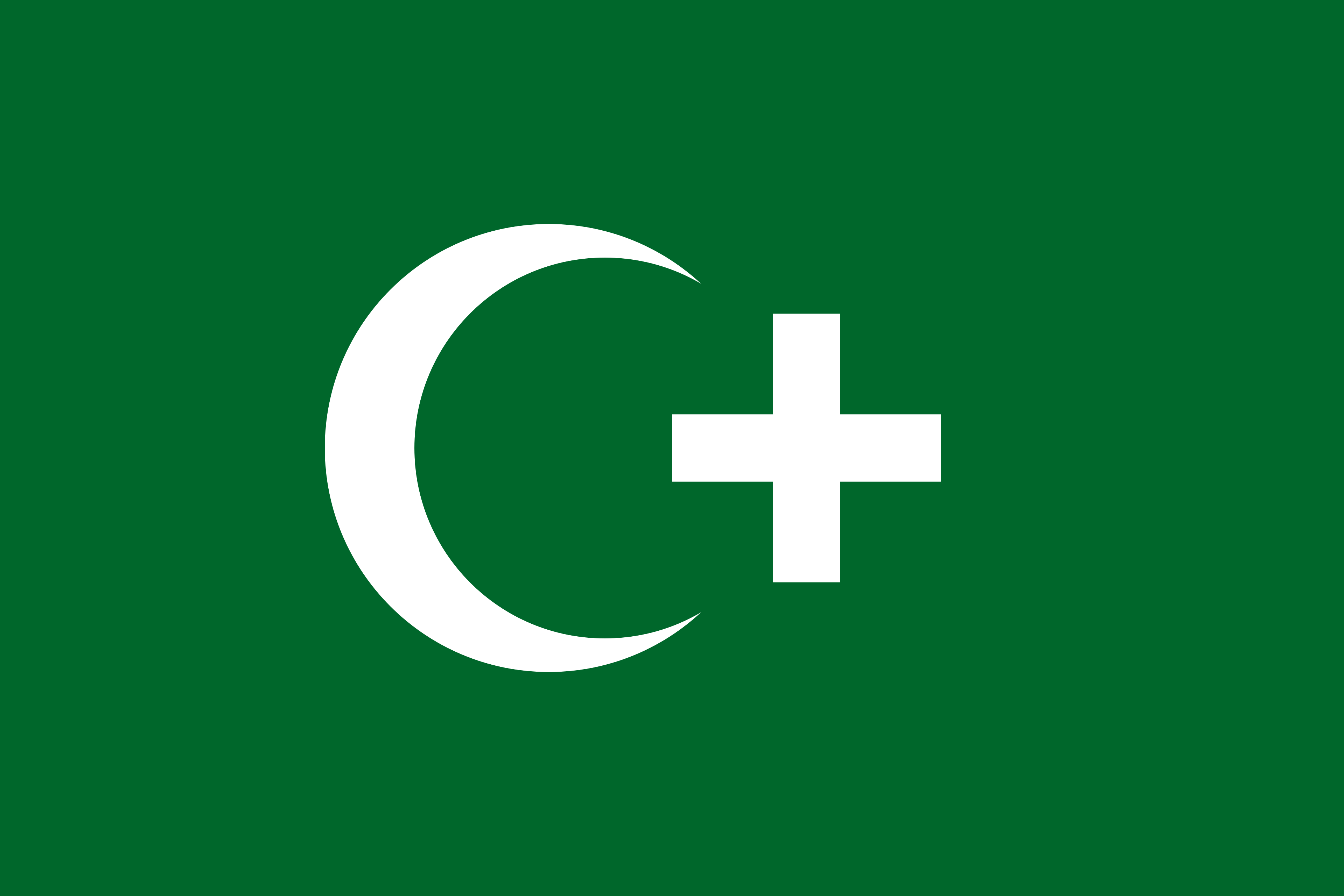
What happened in 1919 was, among other things, the first serious attempt to answer that question. The revolution against British colonial rule brought into the streets a coalition that crossed the lines that would later divide Egyptian society. Muslims and Copts marched together. The cross and the crescent appeared on the same banners. Jews participated in the Wafd, the nationalist party that organized the uprising. The Cattaoui family, one of Egypt's most prominent Jewish families, was among the nationalist leadership. Coptic leaders explicitly rejected the label of "minority," insisting on their full co-ownership of the Egyptian nation rather than the protected but subordinate status that minority designation implied.
The revolution’s rallying cry made the logic explicit: “Religion is for God, and the homeland is for all” (ad-dīn lil-lāh wal-waṭan lil-jamīʿ). The phrase redefined the relationship between faith and nation—religion as a matter between a person and their Creator, and the nation as belonging equally to all, regardless of creed. It directly countered the British colonial strategy of presenting themselves as protectors of Coptic and other minorities against a Muslim majority. By asserting a shared national identity, Egyptians denied the British the fracture they had been exploiting.
In this moment, "Egyptian" became something you could do rather than simply something you were. Participation in the national struggle was the criterion—active, present, political participation in the project of collective self-determination. The logic was inclusive almost by necessity. A revolution needs as many people as it can get.
This is the high point of plural Egyptian belonging—the moment when the question of identity seemed to have been answered in the most generous possible terms. And it was real. The cross-confessional unity of 1919 was not simply propaganda or political theater. The friendships, the shared risks, the genuine mixing that the revolution produced were lived experiences that shaped a generation's understanding of what Egypt was. Umm Lolly's Jewish quarter was continuous with this moment and in some sense its social expression.
.jpg?ref=texani.org)


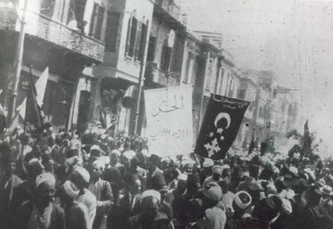
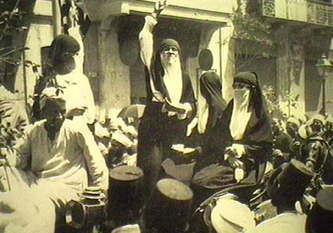
However, the revolution was also the moment when a particular class began to define what Egyptian identity meant, and that class's definition, while initially inclusive, carried within it assumptions that would prove exclusionary over time.
The effendi class—urban, educated, relatively prosperous—was the revolution's intellectual leadership. These were teachers, lawyers, bureaucrats, journalists; men and women who had moved from smaller towns and villages into the cities and had, in the process, acquired both a modern education and a nostalgic relationship to the rural Egypt they had left behind. Their project of constructing Egyptian national identity involved two complementary moves: romanticizing the fellah, the Egyptian peasant, as the authentic bearer of an ancient national character; and defining themselves as the mediators between that authentic Egypt and the modern world.
The fellah in this nationalist imaginary was rural, rooted, continuous with the Pharaonic past, essentially Egyptian in a way that the cosmopolitan merchant or the protected foreigner could not be. This was, as all nationalist origin myths are, a selective and partly fictive construction. But it was a powerful one, and it did real work.
My grandfather's trajectory enacts this narrative almost perfectly. Born in Kafr al-Manshi, a village in the Delta—educated in Tanta, then at Alexandria University, where he eventually became the Dean of the Higher Institute of Health. The son of the village became the urban professional, the effendi. The nation's story was that the effendi was not moving away from the authentic Egypt. He was bringing it forward, translating it into modern institutional form.
The sons of the village became the authors of the nation.
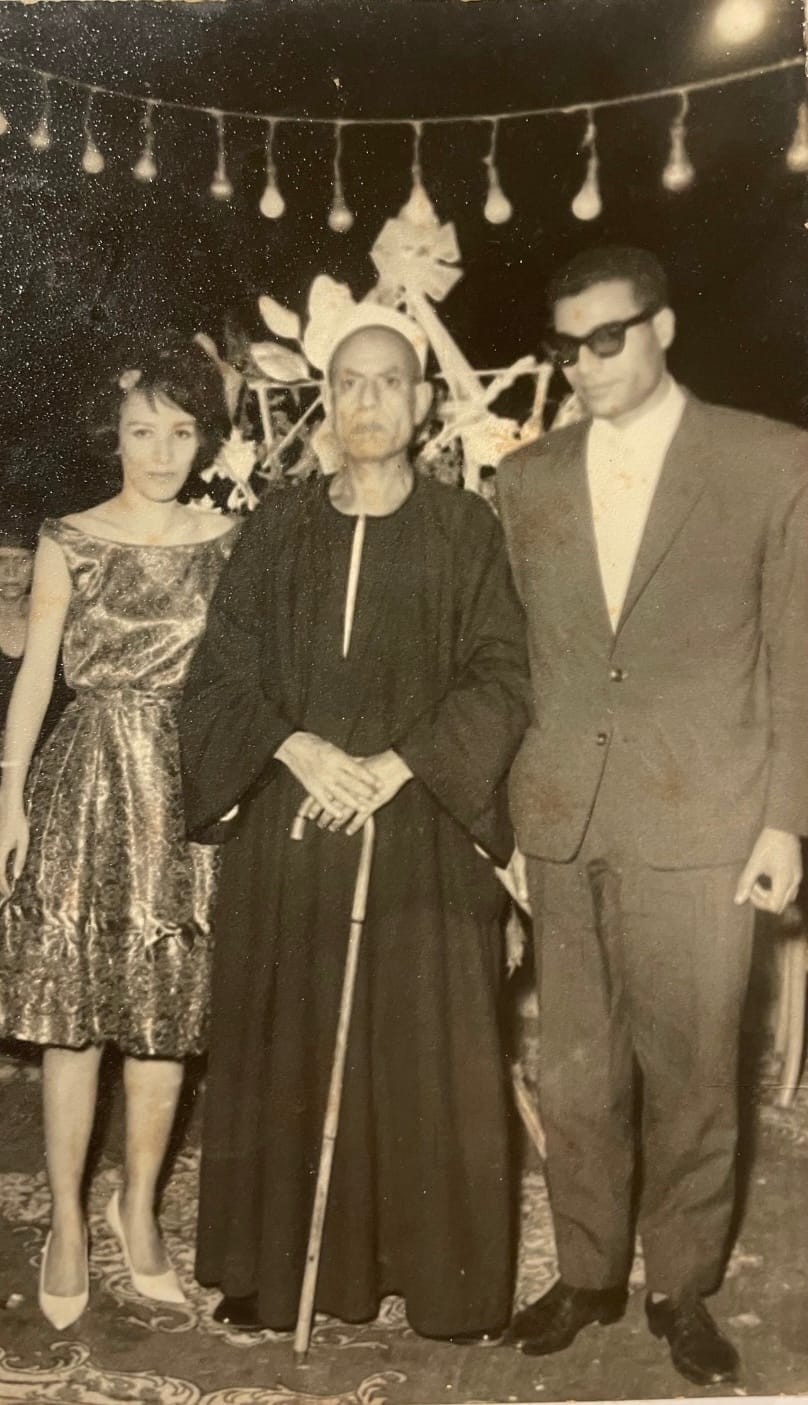
The nation had been imagined in 1919, but it was contested almost immediately. Three visions of Egypt struggled for dominance in the decades that followed.
Pharaonism understood Egypt as a civilization defined by geography and ancient continuity—territorial, Mediterranean, distinct from both the Arab world and the Islamic world. It was particularly associated with Coptic intellectuals and secular nationalists who wanted a basis for inclusion that did not privilege the Muslim majority. Against this stood the tradition of Islamic continuity, which made Islam the defining cultural reference of the nation and Egypt's position in the Muslim world its primary meaning. A third tradition, Arab identity, organized itself around Arabic language rather than Islamic religion—which meant it could theoretically include Copts and even Arab Jews, but positioned Egypt within a larger Arab world rather than as a distinct civilization.
These were competing visions of the future, competing definitions of who could belong.
The civic answer of the revolution—anyone who participates in the national struggle—was real but fragile. It depended on a moment of political mobilization that could not be sustained indefinitely. Once the British were no longer the common enemy, the coalition began to fracture along lines that had always been there, but not thought about.
The Egypt my grandparents remembered was unified. This is how they experienced it, and I am not saying they were wrong. But the Egypt that existed a generation before them was something far more complicated. The memory of unity is a retrospective construction, made possible by the processes I am about to trace, which resolved the complications by eliminating many of their human causes.
The idea of the Egyptian nation was born in a moment of genuine unity. But it carried within it unresolved questions about language, religion, and belonging. What began as an expansive political identity would soon be translated into law—and law would prove less generous than imagination.
PART II: THE SORTING MACHINE
The Constitutional Compromise (1923)
The Egyptian nation had been imagined in the streets in 1919. In 1923, it had to be written into law. The Constitution of 1923 was Egypt's first attempt to define itself as a modern nation-state—to translate the revolutionary energy of the independence movement into a legal structure that could govern a complex, diverse, and rapidly changing society. What it produced was a document of extraordinary ambition and a set of compromises whose consequences would take decades to fully reveal themselves.
The constitution's formal commitments were civic and inclusive. It declared equality before the law for all Egyptians, regardless of religion, language, or origin. It guaranteed freedom of belief and religious practice. Read purely as a legal text, it appeared to have created what its authors claimed: a modern civic nation in which any resident of Egypt, whatever their background, could be a full citizen.
Copts had been deeply invested in the 1919 revolution, and they took this promise seriously. Their leaders had explicitly refused the status of "minority," because minority status implied accommodation rather than co-authorship. They insisted on being Egyptians, full stop.
Jewish Egyptians similarly found room within the civic framework. Joseph Aslan Cattaui Pasha, scion of one of Egypt's most prominent Jewish families, helped draft the 1923 Constitution itself, then served as Minister of Finance and Minister of Communications in the governments that followed. He was simultaneously President of the Jewish Community in Cairo and a co-founder of Banque Misr, the first major Egyptian-owned bank, built explicitly to break British financial dominance. His presence at the drafting table was not a token gesture. It was an expression of what the constitution was supposed to mean.
On paper, Egypt had become a civic nation.
However, the constitution did not exist in a vacuum. It was a political document produced by a coalition—nationalist leaders, a king with ambitions of his own, a religious establishment that needed reassurance, and a population whose cultural identity was, whatever the legal text said, largely organized around Islam and the Arabic language.
And so alongside the civic commitments, the constitution encoded something else: Islam as the official religion of the state, Arabic as the official language. These provisions did not formally violate the principle of legal equality. A Christian or a Jew could still claim full citizenship. But the symbolic meaning was significant and deliberate.
The constitution separated legal equality from cultural identity. The civic layer said: everyone is equal before the law. The symbolic layer said: the normative Egyptian is Muslim and Arabic-speaking. These two layers did not immediately contradict each other, but they created a framework in which equality and centrality were different things. You could be a legal citizen and still not be the kind of person the state understood itself as fundamentally representing.
The constitution did not exclude minorities. It defined what the majority looked like.
The political pressures behind this compromise were multiple. The Wafd party, which led the revolution, understood that a purely secular constitutional order would alienate the religious establishment and potentially fragment the nationalist coalition. King Fuad had briefly harbored ambitions of claiming the title of caliph and Islamic legitimacy was central to those ambitions. Al-Azhar needed reassurance that modernity would not erase it. The constitutional acknowledgment of Islam was, among other things, a guarantee: the new Egypt would be modern without being irreligious.
What the compromise produced was a deliberate ambiguity. A text that could mean different things to different people and therefore allowed a coalition of people with different visions of Egypt to agree on a single document. Ambiguity of this kind is a political necessity. But it has a half-life. Over time, as the political context changes, the ambiguity resolves—usually in favor of whichever vision has more institutional and demographic support.
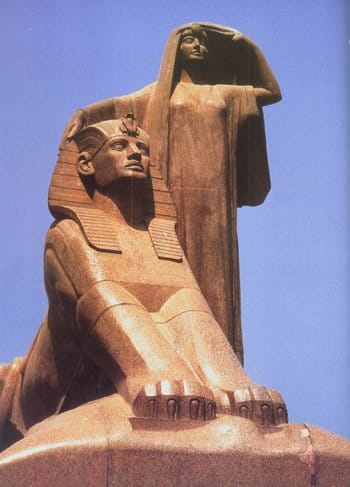

My great-grandmother was taken to school by her mother in 1936. There she met her husband, who became the head of the school. The marriage payment (mahr) was fifteen gold Egyptian pounds. These stories locate my family precisely within the world the 1923 Constitution was creating: a world of expanding education, state institutions reaching into neighborhoods and families, and modern Egyptian citizens being formed through participation in a national project.
The constitution did not just define Egypt. It created the conditions under which families like mine became legible as Egyptian—not in the sense of being recognized as belonging (they had always belonged, in the social sense) but in the sense of having their belonging formalized as part of a modern state apparatus.
That entry was a privilege, and not everyone's entry was so smooth. The ambiguity of civic equality plus Islamic identity would be resolved over time in ways that made this smoother for some than for others.
The constitution had declared who Egyptians were in principle. The nationality laws that followed would decide who counted in practice.
The Legal Revolution (1926–1929)
The nationality laws of 1926 and 1929 introduced a principle that fundamentally transformed the meaning of belonging in Egypt: jus sanguinis, citizenship by blood. Egyptian nationality was transmitted primarily through the paternal line. An Egyptian was, in the eyes of the law, a child of an Egyptian father. The question of who had been living in Egypt, for how long, with what degree of cultural integration, was secondary to the question of who your father was.
This was a dramatic departure from the world I described in the previous sections. In the Ottoman and early colonial order, residence, community membership, and social recognition had been the primary determinants of belonging. The 1926 and 1929 laws replaced this social logic with a genealogical one. What mattered now was not where you lived or who knew you, but who your father's father's father had been.
The implications were immediate. People whose families had been in Egypt for generations but who could not document an Egyptian father—either because the documentation did not exist or because their father had held a different legal status—found themselves on the wrong side of the new frontier. The archival absence I described earlier, the family histories that lived in memory and photographs rather than in official registers, became a legal vulnerability.
The descent principle was not the only filter. The most consequential provision of the 1929 law was what we might call the Arab-Islamic clause: citizenship by birth was available only to those whose fathers belonged to an Arabic-speaking or Muslim-majority population. Its purpose was to distinguish between the millions of people of broadly Arab and Islamic background who had migrated to Egypt from elsewhere in the Ottoman world, and the European and other foreigners who had settled in Egypt under the protection of the Capitulations.
The practical effect was to encode an ethnolinguistic and religious profile into the definition of Egyptian citizenship. Syro-Lebanese Christians qualified. Sudanese and Maghrebi migrants qualified. They were Arabic speakers, and their presence in Egypt was extensive and economically significant. Muslims from across the Ottoman world qualified. Greeks, Italians, and Armenians—however long they had lived in Egypt, however culturally integrated—did not automatically qualify. Many Jews—whose legal status was complex, whose languages were often not Arabic, and whose connections to the broader Jewish world gave them a cosmopolitan rather than a specifically Egyptian profile—found the new criteria difficult or impossible to meet.
The law did not say that Egypt was Arab and Muslim. It made it easier for Arabs and Muslims to become Egyptian.
This is where my family's Moroccan line enters the story. My great-great-grandfather had traced the old Ottoman route from Morocco, Tunisia, Syria, and into Egypt. He settled, traded, and raised his family there and was processed into Egyptian nationality through the 1929 law. Long Ottoman residence, Arabic language, Muslim identity, a trajectory through the Arabic-speaking world: these aligned him with the criteria the law had established. He qualified.
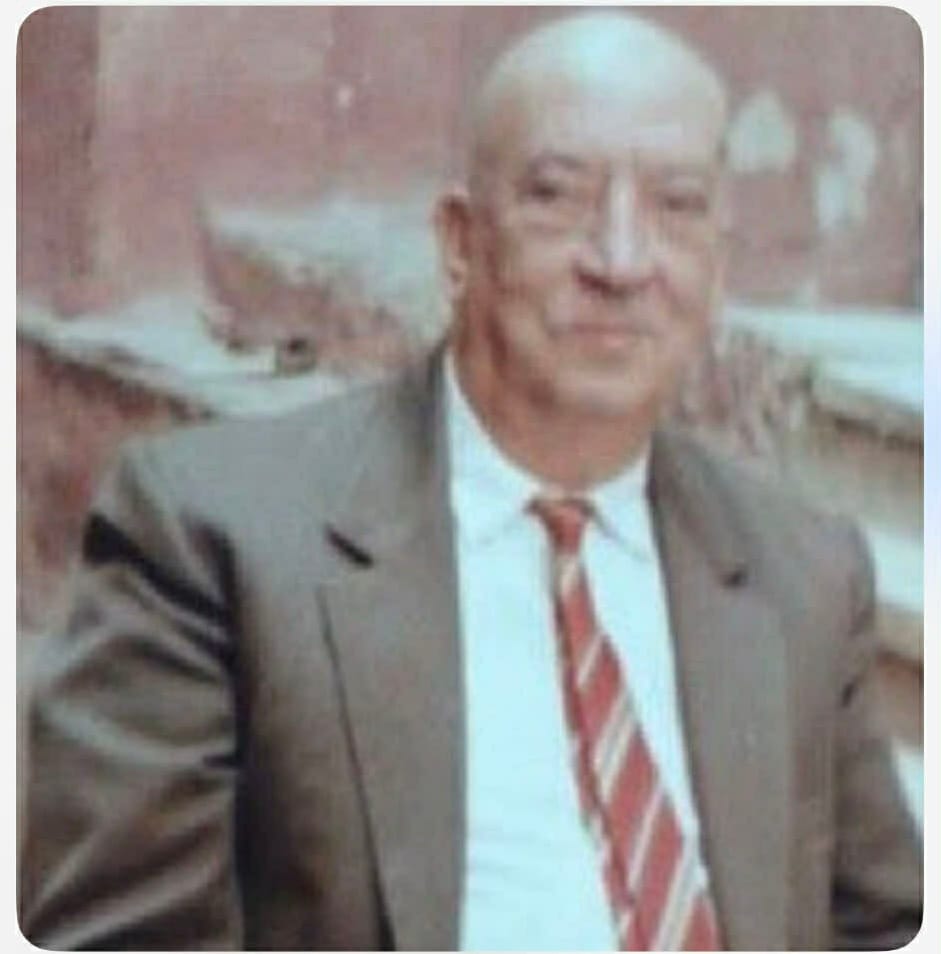
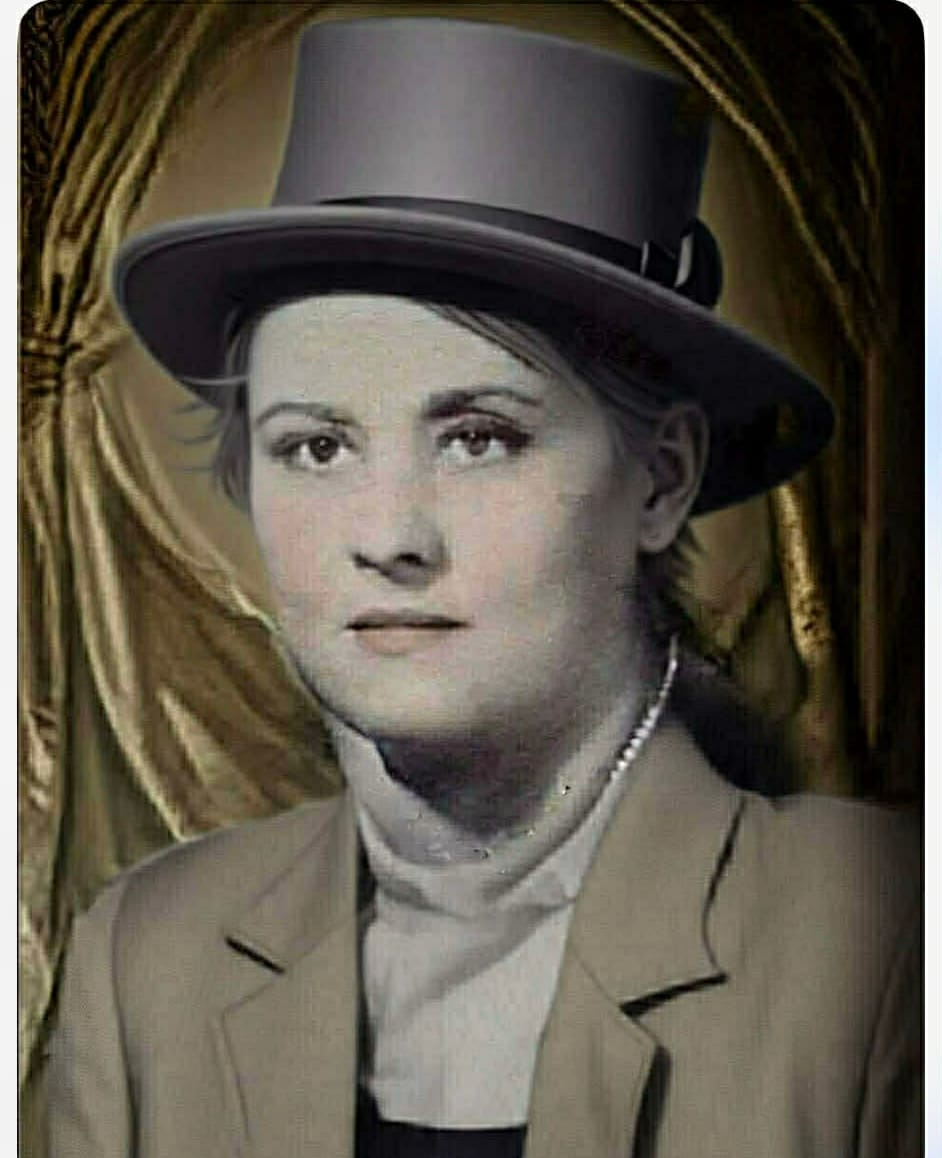
The process recognized something real: he was in every meaningful sense part of Egyptian society. But the process was still a process—an evaluation, a decision made by a state apparatus about whether this particular person met criteria that the state had designed. My family did not simply belong to Egypt. It was made to belong to Egypt by a legal procedure that could as easily have gone the other way had the criteria been drawn differently.
Running back through the genealogy: five generations of men, of whom only the most recent had anything recognizable as modern documentation. The others existed as remembered names, family stories, and the social fact of a family's presence in a place over time. The 1929 law required the state to trace this lineage and confirm it met the new criteria. That my mother’s side of the family became Egyptian rather than stateless or resident-foreign was a function of historical accident as much as of any deliberate choice.
Many people fell through the gap. The nationality laws created, as a side effect of their definitional clarity, a population of people who did not meet the criteria but who also had nowhere else to go. The Ottoman empire that had given them their previous status no longer existed. Turkey was conducting its own brutal process of national homogenization. The consular protection that had shielded many foreigners under the Capitulations was being wound down as Egyptian sovereignty expanded.
Statelessness was the result for many whose legal situation had been, under the old system, simply "complicated." Families who had maintained their foreign status for generations and had never formalized their Egyptian status found themselves suddenly very much in need of a status they had never had to establish. The law did not expel these people. It created categories in which they no longer belonged.
That is a more subtle form of exclusion—but in the long run, no less consequential.
The mutamassirūn, literally “those who had been Egyptianized,” were Egyptian in every sense except the legal one. The term acknowledges the social reality while simultaneously marking its incompleteness. They had become, not been. And the gap between becoming and being was precisely where the law now operated.
A person could be Egyptian in life but not in law. On the street, they were neighbors. In the law, they were already different.
The photographs above the door no longer served as evidence. What served as evidence was the document: the birth certificate, the nationality application, the notarized proof of paternal lineage. These were things my family managed to produce. Others could not.
The same law that made my family Egyptian made it impossible for others to be.
By the late 1920s, Egyptian identity had been transformed from a lived condition into a legal status. It could be granted, denied, or withheld. The nation was no longer something people inhabited together. It was something the state administered.
Living Egyptian, Legally Foreign
Imagine a street in Sidi Gaber, in the Mustapha Pasha neighborhood of Alexandria, sometime in the 1940s. A Jewish textile family in one apartment. A Greek grocer on the ground floor. An Egyptian civil servant and his family on the second floor. The tram at the end of the block. The port not far.
On that street, the people who live there belong together in any social sense the word "belonging" can bear. They share the noise and smell of common life. They know one another's routines. The civil servant's children know the Greek grocer's name; the grocer extends credit to the textile family; the families share the minor dramas of apartment living—leaking pipes, loud arguments, the peculiar intimacy of people who are not related but whose lives are structurally entangled.
The civil servant is Egyptian by nationality—a legal category now, with a number, a document, a formal standing. The Greek grocer may hold a Greek passport or may be stateless; he is certainly not Egyptian in the legal sense. The Jewish textile family's status is complex: some Egyptian Jews had successfully obtained nationality under the 1929 law; others had not; others held foreign protection status inherited from the era of the Capitulations.
Why had so many not formalized their belonging earlier? The reasons were, in most cases, perfectly rational given the incentives that existed at the time. Under the Capitulations system, being legally foreign was often advantageous rather than disadvantageous. A Greek merchant who maintained his Greek consular standing could use Greek courts, which were more predictable and less corrupt than local courts. A Jewish family with French or Italian protection could access legal resources unavailable to Egyptian nationals. The foreignness was not an accident or an oversight. It was, for many families, a deliberate choice maintained across generations because it made economic and legal sense.
The logic of this choice is hard to fault, given the circumstances. But it created a problem that would only become visible when the incentive structure reversed—when Egyptian sovereignty expanded to the point where consular protection ceased to be an advantage and became a liability.
My great-uncle was born in Alexandria during this period. Among his childhood friends was a Jewish boy named Mimi. They played together. The Jewish family, observant, could not light the stove on the Sabbath; my great-uncle, as a child neighbor, would sometimes do it for them. This is the kind of intimate, daily, cross-communal dependency that arises naturally when people live in close quarters over time.
The Jewish family next door was not, from my great-uncle's childhood perspective, a representative of a minority group. They were his neighbors. Their religious practices were one of the neighborhood's ordinary facts, like the schedule of the tram.
The law had already classified them differently from him. He did not know this, or if he knew it, he did not experience it. Life and law were running on separate tracks.
My family, at this point in the story, sits comfortably inside the emerging norms. My grandfather—Arabic-speaking, Muslim, in the process of becoming the kind of professional the new Egypt needed—is on the right side of every criterion the state is developing. His demographic profile made Egyptianization a ladder. For others, it was a wall.
This is not something to be smug about. The comfort of my family's position was not earned through superior virtue or foresight. It was a function of who they already were.
By the 1940s, Egypt still looked plural on the surface. Streets, schools, and neighborhoods remained mixed. Beneath that surface, the state had already begun to sort its population into categories that did not match how people lived. The consequences of that mismatch had not yet fully arrived. But they were already inevitable.
Language, Labor, and the Nation (1937–1947)
For a time, Egyptians and non-Egyptians could live side by side without the law fully intruding on daily life. That began to change when the state turned from defining identity to enforcing it.
The first structural change came in 1937 with the Montreux Convention, which abolished the Capitulations. Under the old system, being legally foreign meant having access to a parallel legal apparatus that was, in many respects, more protective than Egyptian courts. The Convention's abolition changed this calculation entirely.
Foreignness ceased to confer legal advantage. It became, instead, a form of exposure.
For the communities that had maintained their foreign status precisely because of the advantages it offered, this was not an abstract legal change. The Greek merchant who had kept his Greek consular standing for the courts now found himself in Egyptian courts without those protections. The Jewish family that had maintained Italian nationality as a hedge found that hedge no longer effective.
The same status that once shielded people now marked them.
Language was one of the first places where alignment began to be enforced. The Arabic language law of 1942 required Arabic in government communications, corporate correspondence, and public transactions. This was a sovereignty measure, a step toward making official Egyptian life actually Egyptian rather than a continuation of multilingual practices inherited from the colonial and Ottoman periods.
For the polyglot commercial communities of Alexandria and Cairo, this was a practical demand. Business correspondence that had been conducted in French or Italian for generations had to be reoriented. Schools that had taught primarily in European languages had to rebalance their curricula.
More importantly, the language law signaled the future direction of national identity. Language shifted from a medium of communication to a test of belonging. You could speak Greek or Italian at home, but if you wanted to participate in the official life of the country Arabic was now the price of admission.
For my family, this was not a hardship. They were Arabic speakers; the language law confirmed their existing practice. For the polyglot communities of Alexandria, whose home language was Greek or Italian or Judeo-Arabic, who conducted business in French, who sent their children to French or Italian schools, the law was a harbinger.
The space for being both Egyptian and something else began to shrink.
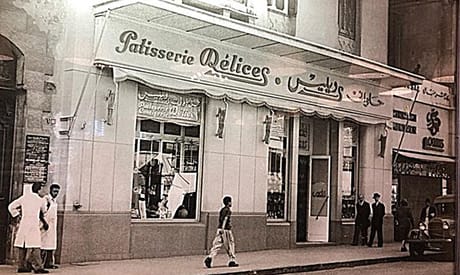
The Companies Law of 1947 was the most comprehensive and consequential of the economic Egyptianization measures. Its provisions were specific and demanding: at least 51% of a company's ownership had to be Egyptian; at least 40% of its board members; at least 75% of its administrative staff; 90% of its labor. "Egyptian" was defined by the nationality laws of 1926 and 1929, which meant that all the exclusions and ambiguities of those laws now had direct economic consequences.
The immediate effects were severe. Jews who had not acquired Egyptian nationality found themselves unable to hold administrative positions in firms the new law required to be majority-Egyptian. Greeks and Italians in similar positions faced similar displacement. Capital flight accelerated as foreign-owned businesses found themselves required to restructure their ownership in ways that were economically disruptive and sometimes practically impossible.
Think of it in terms of specific trajectories interrupted: a Jewish accountant who had spent twenty years building a career in an Alexandria firm, who spoke Arabic, who had perhaps been born in Egypt—if he had not managed to obtain Egyptian nationality, he was now potentially unemployable in the firm he had helped build. The 1947 law made legal categories economically determinative in a way that made the life-law gap suddenly, painfully visible.
The same policies that excluded some created opportunity for others.
On my father’s side, my grandfather’s path—from a farm in Kafr al-Manshi to the deanship at Alexandria University—was made possible in part by a state that chose to invest in people like him, expanding education and Egyptianizing professions once dominated by foreigners and minority communities. These changes created space for his generation.
Egyptianization did not simply remove foreigners. It redistributed their place.
"Foreign" stopped being a technical category and became a political problem. When foreignness was a technical legal status, it had limited moral charge. You were foreign the way you were male or female: a fact about you with certain legal implications, but not a mark of suspect loyalty.
As nationalist politics intensified, this changed. "Foreign" became associated with economic exploitation, loyalty to interests other than Egypt's, and a precieved failure to commit fully to the national project. The Greek merchant who had kept his Greek passport was now, in the nationalist imaginary, not just someone with a different legal status but someone whose loyalty was divided.
This was not entirely wrong. The colonial economic structure had genuinely privileged foreign capital and foreign labor in ways that were inequitable. However, the nationalist critique was applied far more broadly than any honest account of that inequity would justify. It was applied to families who had been in Egypt for generations. It was applied to the mutamassirun, who had been Egyptianized in every sense except the legal one, and who were now being told that the legal sense was the only one that mattered.
By the late 1940s, the question was no longer who belonged. It was who did not. The sorting machine was running.
From Neighbor to Stranger (1948–1956)
My great-uncle does not remember the day Mimi left.
This is the most important thing about the story, and also the most ordinary. You do not remember the last time you see someone you expect to see again. The last ordinary afternoon of childhood friendship does not announce itself as the last. Then they are gone.
Mimi left with his family after 1956. My great-uncle was still a child. The friendship ended with a disappearance. He does not remember the moment they became foreign, only that they were gone.
The history of what happened between 1948 and 1956 in Egypt is the history of that disappearance at scale—not just of Mimi's family but of tens of thousands of Jewish Egyptians, and with them the entire social world that had made their presence ordinary. It is also the history of the transformation of people from neighbors into strangers, from residents into enemies, from members of a community into representatives of an external threat.
The 1948 Arab-Israeli War was the pivot. The war was not, in itself, the cause of Jewish expulsion—the relationship between Egyptian Jews and Palestinian Zionism was complex, and the vast majority of Egyptian Jews had no significant connection to the Zionist movement. The war simply provided the political context in which the categories built over the previous two decades could be weaponized.
"Zionist" became a term of accusation—undefined, expandable, potentially applicable to anyone with any Jewish identity or any Jewish connection. Because it was undefined, it could not be defended against. You could not prove you were not a Zionist in the way the term was being used, because it was not being used as a description of actual belief or activity but as a political classification.
The pattern of expulsion was administrative rather than judicial. No trials. No evidence standards. No appeals.
The mechanism was classification: someone was labeled Zionist, or a risk, or a foreign national whose presence was no longer compatible with Egyptian sovereignty. Then administrative action followed—arrest, internment at places like Abu Zaabal camp, orders to leave the country, confiscation of property, and the forced signing of documents in which people waived their rights to their own possessions as the condition of being allowed to exit.
The state did not need to prove anything. It only needed to classify.
The legal architecture constructed over the preceding three decades made classification sufficient. If you were classified as foreign, as many Egyptian Jews were, your continued presence in Egypt was a matter of administrative discretion rather than legal right. The state could revoke that discretion without judicial process. The earlier exclusions now made removal administratively easy.
The Cicurel family makes the mechanism most visible. The Cicurels operated one of the largest and most respected department stores in Cairo—a fixture of the commercial and social life of the city. The family had been in Egypt for generations; they were woven into the fabric of Egyptian commerce and culture. They were not foreign agents. They were Egyptians whose religion happened to be Jewish.
The Cicurel business was sequestered, ultimately nationalized and transformed into an Egyptian state commercial enterprise under a different name. The family left. No court found them guilty of anything. No evidence was produced against them.
The Cicurels were not expelled as outsiders. They were turned into outsiders.
If it could happen to a family with that degree of social integration, economic prominence, and historical presence it could happen to anyone. The sorting machine had demonstrated its most decisive output: no depth of social belonging could protect against legal classification, and legal classification could, in the right political moment, undo social belonging entirely.
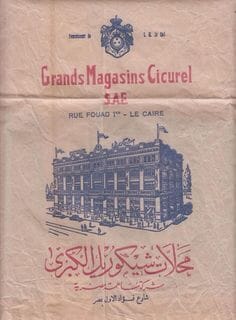
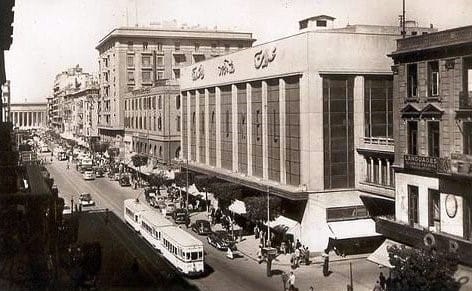
The broader pattern extended beyond Jews. British and French nationals were expelled following the 1956 Suez Crisis, their property sequestered, their presence in Egypt abruptly terminated. Greeks and Italians, managing their uncertain position in Egyptian society for decades, found that the narrowing space had finally closed. The cosmopolitan Alexandria was being rapidly and deliberately dismantled.
For the many people who were already stateless there was the additional horror of having nowhere to go. They were expelled from Egypt but not necessarily welcomed anywhere else. Some ended up in Mediterranean limbo, belonging nowhere that any law recognized.
The disappearance of Egypt's Jews was followed by the disappearance of their memory.
My family does not have stories about Jews leaving Alexandria. My grandparents' Egypt is an Egypt of Arab socialist modernity, of Gamal Abdel Nasser, national aspiration, and the genuine expansion of opportunity for families like theirs. The Jews, the Greeks, the Italians do not figure in the Egypt they remember, because their memory is organized around the world that remained, not the world that was removed.
The fragments survive, but not as narratives. My great-uncle's memory of Mimi is a fragment: a specific name, a specific childhood practice. It is not embedded in a narrative about the expulsion of Jews from Egypt, because he was a child when it happened and nobody gave him a narrative for it. The absence simply was, and as he grew up, it became less an absence than a baseline.
Language changed too. My grandfather spoke of el-yahūd—the Jews—without distinction between Egyptian Jews and Israelis, between the neighbors who had shared his city and the adversary state that had defined the political horizon of the Arab-Islamic world. A neighbor can become an abstraction faster than memory can adjust.
I heard antisemitic language growing up—in jokes, casual references, and the air of Egyptian culture. My discomfort was genuine and persistent. For a long time I could not explain it beyond the intuition that it was unfair, that it was generalizing from a political conflict to a category of human beings in a way that seemed unjust. The historical understanding came much later.
Moral discomfort does not always lead to historical understanding. Sometimes you carry the discomfort for years before you have the framework to explain it.
By 1956, Egyptian identity had become something that could be revoked. The categories created by law, reinforced by language and labor policy, and sharpened by war had been enforced through expulsion, confiscation, and silence. What remained was not just a different population, but a different imagination of who could belong.
What had once been a shared neighborhood had become, in retrospect, someone else's lost home.
Replacement and Rise
The Egypt that Nasser was building was not organized primarily around exclusion, even though exclusion was one of its instruments. It was organized around a positive project: sovereignty, economic independence, social mobility for Egyptians who had been excluded from the formal economy and the educated professions under the colonial and semi-colonial order. Land reform broke up the great estates. Nationalization transferred economic resources from foreign and minority ownership to state control. Massive expansion of free public education created opportunities for young Egyptians from families that had never had access to higher education before.
These were not negligible achievements. For the specific population they served, they were genuinely transformative.
The nation imagined in 1919 became socially real in the 1950s, but not in the form its originators had envisioned. What the Nasserist state delivered was something more exclusive but also more broadly participatory: an Arab-Islamic Egyptian identity in which Muslim Egyptians of all classes could now imagine themselves as full participants in national life.
My grandfather is almost a perfect enactment of this story. The son of a village, educated through state institutions, achieving professional eminence in a state that needed him. He was not only a product of his historical moment; he was also a person who made choices and worked hard. But the structure made the life possible—and the structure was the product of the same process that made other lives impossible.
The same state that closed doors for some opened them for others. My grandfather walked through those doors.
The effendi class expanded dramatically in the 1950s and 1960s as the state pumped resources into education and created institutional demand for professional Egyptians. The fellah's children became the nation's professionals. The village—which had been the nationalists' symbolic source of authentic Egyptian identity—now produced the people who ran the country. The romantic image of the Egyptian peasant, which the effendi class of the 1919 generation had used to construct a national mythology, was now the social reality of the national leadership.
Egyptian identity was democratized—but also standardized.
The number of ways to be Egyptian decreased, even as the number of Egyptians who could participate in the national project increased.
My grandparents remembered the Nasser era as a golden age. This memory is not false. From where they stood—inside the group being elevated, educated, and given institutional standing—it was a golden age. The fact that it was built partly on the displacement and dispossession of others does not make their experience of it wrong. It makes it partial.
The same moment that feels like loss from one angle feels like arrival from another.
The benefits of a social transformation are visible to those who receive them. The costs are visible to those who bear them. The two groups rarely have the same view.
By the 1960s, Egyptian identity appeared coherent, stable, and obvious. Fewer minorities. Less ambiguity. The state narrative dominant. Egyptian identity began to feel natural precisely because its complexity had been reduced.
What was gained in clarity was lost in plurality.
Ironically, the removal of the foreign commercial elite did not end elite concentration—it redirected it. The Greek merchant, Jewish shop owner, and Italian banker were replaced not by a broad middle class but by a new Egyptian elite: state-connected, military-adjacent, and similarly concentrated. The Nasserist revolution expanded opportunities for the professional middle class, but it also created new systems of patronage at the top. Concentrated advantage did not disappear; it was simply re-staffed with Egyptians.
The Egypt that emerged after the 1950s was more accessible to people like my grandfather than the Egypt that had come before. It offered education, mobility, and a clear path to belonging. But it did so by narrowing the definition of who could belong. The plural world of Alexandria was replaced by a nation that was more uniform, more legible, and less accommodating of the difference it had once organized its life around.
By the time my grandparents came of age, the question of who was Egyptian no longer felt like a question. It felt like an answer.
PART III: MEMORY, STRUCTURE, AND AFTERLIVES
Memory and Erasure
The Egypt my family remembers and the Egypt my family lived in are not the same.
My family believes, in the way people believe things that are never quite articulated but still shape how they understand the world, that Egypt was always essentially as it was when they were growing up: Arabic-speaking, majority Muslim, and unified around a recognizable cultural identity. The Jewish neighbors, the Greek streets, the Italian architecture, the polyglot cafes—these either do not appear in the memory, or appear as curiosities.
But the archive of my family's own stories contradicts this. Umm Lolly in the Jewish quarter. My great-uncle's friendship with Mimi. The man from Switzerland returning to look for his father's photograph. These fragments exist. They were told to me. But they exist as fragments, not as narrative—assembled into nothing because the framework that would have made them intelligible disappeared along with the world they described.
The mechanics of forgetting are not primarily the mechanics of active suppression. My family is not concealing anything. The forgetting is more structural than that.
When the Greek grocer leaves the neighborhood, a new grocer comes. When the Jewish family moves away, another family moves in. Daily life reorganizes itself around the new population and gradually stops registering the absence of the old one. You remember your neighbors when your neighborhood is stable enough that their absence is felt. When the neighborhood itself has changed, the absence becomes invisible—absorbed into the ordinary texture of the way things are.
Generational turnover does the rest. My grandfather may have had some memory of the Jews of Alexandria in his early adult life. But by the time he had children, and by the time those children had me, the absence had become so complete and so normalized that there was no occasion to narrate it.
The state narrative filled the gap. Post-Nasser Egypt told a story about itself that was coherent and continuous: Egypt was Arab and mostly Muslim, ancient and united, always had been, always would be. The cosmopolitan interlude, if it was acknowledged at all, was understood as an anomaly, a distortion produced by colonialism, rather than a constitutive feature of Egyptian history. The national narrative was written in the image of the national present, and the national present was more homogeneous than any moment in Egypt's recorded history had actually been.
My grandfather's use of el-yahūd—a term that, for him, collapsed the neighbor into the geopolitical enemy—records this process. In his youth, it could refer to specific people he knew; over time, that meaning was crowded out as the geopolitical sense expanded. The local was absorbed into the political.
This is what happens to categories when the people they once described are removed. "Jews" in Egypt stopped being a description of co-citizens and became a geopolitical abstraction. The abstraction was not wrong in the sense of being invented; the Arab-Israeli conflict was real. But it was wrong in the sense of being incomplete: it replaced a full human reality with a political category that could not do justice to it.
Before: Jewish neighbor. Mimi. A child. A friend. After: el-yahūd. Abstract. Political. Distant.
My family's memory is not an exception. It is what successful national narratives look like from the inside. The people who live in a country that has undergone radical demographic transformation do not, typically, carry that transformation in active memory. They carry the world as it is now and treat it as continuous with the world as it has always been.
This is why the study of history has political importance. Because the understanding of the past changes what we think is natural and inevitable about the present. Egyptian identity as it exists today feels natural because it is the only version that most Egyptians have ever encountered. The history I have been tracing demonstrates that it was not inevitable. It was made, through specific decisions and policies, at specific historical moments, with specific human costs. Understanding that does not require condemning it. But it does require seeing it for what it is.
The man from Switzerland, returning to look for his father's photograph, was looking for something that the normal processes of historical forgetting had almost completely erased. He was looking for the trace of a belonging that had survived longer in social memory than in legal record, but that had not survived indefinitely in either.
The absence he found in Alexandria was not the absence of a specific object. It was the absence of a world.
Reclassification
My grandparents on my mother’s side arrived in the United States in the 1960s. My grandfather had completed his engineering degree in Alexandria and came as a Fulbright scholar—Colorado first, then Michigan, eventually a PhD and the beginning of an academic career. They stayed for roughly seven years before returning to Egypt, long enough for my mother to begin school in America, young enough that Egypt remained the frame through which they understood everything.
They did not arrive as ambiguous figures. They arrived already classified.
This is the first thing that distinguishes the American experience from the Egyptian one. In Egypt, identity had been the subject of decades of legal construction. In America, the classification happened instantly and with remarkable confidence. They were white.
This outcome had a legal history they were not aware of. American naturalization law had long reserved citizenship for “free white persons,” later expanded to include persons of African descent, categories whose boundaries were tested repeatedly as immigration patterns changed. The question of where Arabs and Egyptians fit had been worked out across several court cases in the early twentieth century, with a decisive affirmation in Ex parte Mohriez (1944).
The logic of that ruling is worth pausing on. The judge did not rule that Arabs were white because of any scientific or biological argument. He ruled on the basis of what he called the "common man" test: ordinary Americans, he argued, would group Arabs with other Mediterranean peoples already considered white. Whiteness, in other words, was not a scientific determination. It was whatever the dominant population found obvious.
The ruling went further. Arabs were included in whiteness partly because they could be written into Europe's civilizational story—as transmitters of Greek philosophy and conduits of the learning that became the Western tradition. They were not classified as white because they were European. They were classified as white because they contributed to the story Europe told about itself.
Then, with the geopolitical context of World War II pressing, the judge added a third consideration: it would be detrimental to American interests, at a moment when the United States was cultivating Arab alliances, to exclude Arabs from the rights of citizenship. Whiteness, here, expands not because of any principled rethinking but because the state needs it to expand.
By the time my grandparents arrived, this was not live legal debate. It was settled classification. The 1960 census counted North Africans and Arabs as white. The category had been bureaucratically stabilized.
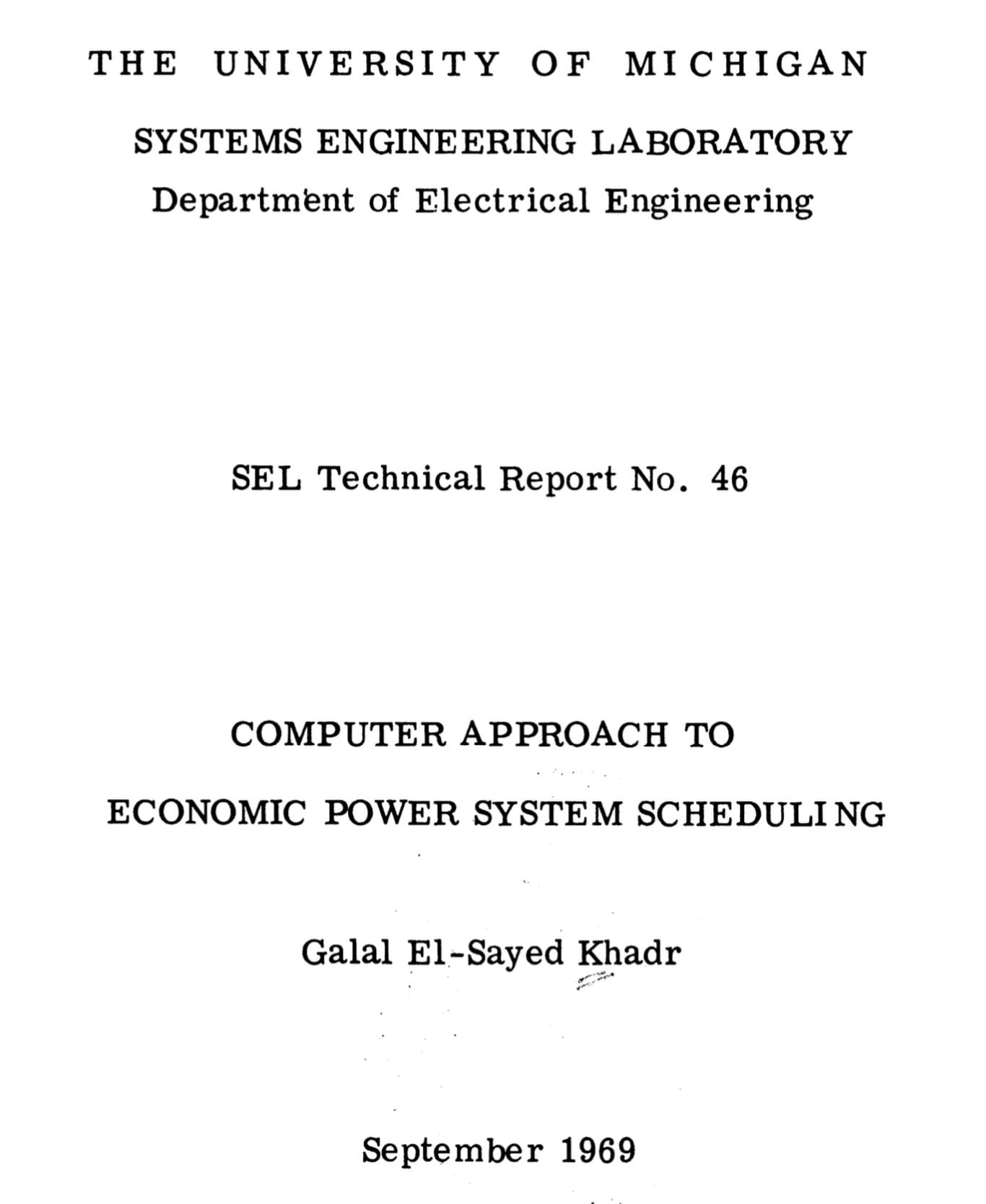
The classification was not only legal. It was lived. My grandparents were treated as white in everyday life. They were absorbed into university spaces, neighborhoods, and professional environments without the social suspicion or boundary enforcement that marked the experience of Americans who were not white. They did not experience themselves as navigating racial ambiguity.
The more precise thing to say is that they lived as Americans without quite becoming American in their own self-understanding. They went to parties and social gatherings and university functions; they moved through American life with ease and without friction. The mosque was not part of their world in those years. What marked them as Egyptian was not a set of practices they maintained in private but the company they kept—Egyptian friends, mostly, who were doing the same thing they were: living the American professional life while holding Egypt as the place they came from. They were Americanized in nearly every observable sense. They just didn't think of it that way.
In Egypt, identity had to be proven and could be denied. In America, it was assigned and rarely questioned. In both places, it was the system—not the person—that decided.
But the systems produced opposite movements. Egypt's system narrowed: it made finer and finer distinctions, excluded more and more, and ended by removing people who had lived there for generations. America's system, at least in this instance, simplified and absorbed: it took a family from Alexandria, North Africa, with Moroccan and Turkish ancestry and a lineage claim running to the Prophet ﷺ and filed them under a single category. White.
My mother left the United States at age five, when my grandparents returned to Egypt in 1970. The decision had been building for years. My grandfather’s brother had been killed in the 1967 war, and the loss settled heavily over the family. His mother was grieving. What had begun as a temporary stay in America became harder to sustain at a distance. Eventually, the pull of family brought them back.
The American classification did not have time to become inheritance. Egypt reasserted itself. My mother grew up Egyptian in a way that my grandparents’ American years had not interrupted. The system had classified the family as white, but the classification had not had time to become a self-understanding. Egypt was still the frame.
I am the product of the American years without having lived them. My mother’s birth in Boulder, Colorado and American citizenship enabled her and my father to immigrate to America after I was born.
The Deep Structure: Identity as State Infrastructure
What happened in the Nile Valley over the first half of the twentieth century happened simultaneously, in variant forms, across the entire territory of the old Ottoman Empire and the broader colonial world. Turkey expelled its Greeks and Armenians. Iraq expelled its Jews. Syria, Lebanon, and Palestine were partitioned and reorganized along lines that generated refugee populations on an enormous scale. The process has a name in the scholarly literature: "unmixing of peoples." Egypt participated in it, with its own particular chronology and character.
This prevents us from making Egypt's story exceptional in either direction: neither as a uniquely tolerant paradise destroyed by nationalist excess, nor as a uniquely intolerant state conducting uniquely brutal exclusions. Egypt was a modern nation-state in formation. But that observation requires a qualification — because not all modern nation-states in formation followed the same path.
The United States is organized, at least in its civic ideal, around the proposition that national identity can be acquired rather than inherited — that you become American through participation, commitment, and legal membership rather than through ancestry, religion, or ethnicity. That ideal has been violated throughout American history, but the ideal itself is real, and it has done real work. It has provided a framework within which the definition of belonging has, over time, expanded rather than contracted.
Egypt in 1919 had a version of this ideal. The revolution that year was explicitly civic: Muslims and Copts and Jews marching together. “Religion is for God and the nation is for all.” The Wafd's vision of Egyptian identity was territorial and inclusive in a way that was, in that moment, lived.
The question worth asking is why that civic moment didn't hold. Egypt had a civic nationalist tradition. It had leaders who articulated an inclusive vision. It had, in the diversity of Alexandria and Cairo, a social reality that a civic framework could have organized differently. The narrowing that followed was not inevitable. It was a series of decisions: to define citizenship by descent rather than residence, to encode Islam and Arabic as state identity rather than as cultural majorities, to treat economic Egyptianization as an ethnic project rather than a redistributive one, and finally to weaponize the category of "Zionist" as an administrative tool of removal.
Empires manage difference. Civic nation-states, at their best, channel it. Ethnic nation-states eliminate it.
The Ottoman Empire governed its diverse populations under a system that acknowledged difference, regulated it, sometimes exploited it, but did not attempt to eliminate it. This was not pluralism in the liberal sense; it was the pragmatic tolerance of a polity too large and too varied to homogenize. But it meant that difference could be ordinary.
A civic nation-state offers something the empire did not: the possibility of genuine equality across difference, membership based on shared commitment rather than shared origin. That is a better deal than imperial accommodation, in principle. But it requires sustained political will to maintain, because the ethnic alternative is always available.
Egypt took the ethnic path not because it had to, but because the political forces that might have held the civic path open were outmaneuvered, gradually and then decisively, by a nationalism that found it more useful to define Egypt by what it was not than by what it aspired to be.
There is a further irony in what Egyptian identity actually became. The Arab-Islamic synthesis that replaced the civic ideal was not, in practice, as universal as it claimed. Islam and Arab identity became so thoroughly fused in the Egyptian national imagination that the distinction between them collapsed. To be Egyptian was to be Muslim was to be Arabic-speaking. All of these were treated as a single, indivisible package.
The consequences of that collapse are still visible. When my wife, who has South Asian heritage, visits Egypt, she is met with confusion about her Islam. How does she pray if she doesn't speak Arabic? Does she know how to read the Qur’an? One relative asked her, with genuine curiosity rather than malice, whether she knew that Muslims perform wudū before prayer. The question assumed that Islamic practice was transmitted through Arabic language and culture, and that a person who did not come from that world might simply not know how to be Muslim correctly.
This is what ethnic nationalism does even to the universal. Islam is a global religion, but Egyptian national identity absorbed it so completely that it became, in the popular imagination, a local inheritance rather than a universal tradition. The Arab-Islamic Egyptian was not just one kind of Muslim. He was, implicitly, the default kind.
The process through which Egyptian identity narrowed can be analyzed through four tools that states deploy when they take the ethnic rather than civic path. The first is documentation — the replacement of social memory and community recognition with official records and nationality papers tied to ancestry rather than residence. The second is language standardization — not merely making Arabic official, which any civic state might do, but using it as a filter to determine who belongs. The third is labor regulation — the use of employment law to make legal classification economically determinative. The fourth is loyalty testing — the political mobilization of concepts like "Zionism" or "foreign ties" to identify and remove those whose presence is considered incompatible with national unity.
These four tools are deployed sequentially in Egypt's history in a way that is almost unusually visible. Documentation came first: the 1929 nationality law established what counted as Egyptian. Language came second: the 1942 law made Arabic the administrative requirement. Labor came third: the 1947 Companies Law made nationality economically determinative. Loyalty came fourth: the post-1948 use of "Zionism" as an administrative accusation made identity into a political vulnerability.
Each tool ratcheted the definition of Egyptian identity further from the civic ideal of 1919, and closer to an ethnic and religious profile that the revolution had explicitly refused.
Identity is not just declared. It is built through the mechanisms that determine who can speak, work, belong, and remain.
What feels like identity is often the residue of policy.
The person who feels deeply, obviously, Egyptian is not wrong to feel that way; that feeling is real and has real effects in the world. But the feeling of naturalness is itself a historical product. It is the feeling produced by a mechanism that has successfully made a particular identity seem like the only possible one.
My family across five generations demonstrates this argument. Umm Lolly lived in the pre-national world: identity layered, plural, organized around neighborhood and community. My great-grandfather was processed into Egyptian nationality through the first round of documentation: the 1929 law, the replacement of social recognition with legal status. My great-uncle experienced the social world that the legal machinery had not yet fully transformed: the mixed neighborhood, the Jewish friend. My grandfather benefited from the completed transformation: the institutions the new Egypt had built, the professional opportunities Egyptianization had created. My grandparents in America were reclassified by yet another arrangement: the American racial order. Now, I stand at the far end of this process — at the point where an identity that was built, enforced, and stabilized across a century has become optional enough to be lost. My family is not just Egyptian. It is a record of how identity systems change.
The implication is that if identity is not something you have but something that arrangements of law and power permit or deny, then the question of "what am I?" loses the stability it seems to promise. The categories are real; the constraints are real; the permissions are real. But they are contingent and historical, not natural and eternal.
Identity is less about who you are than about what structures allow you to be.
The question moves from "What is an Egyptian?" to "How was Egyptian-ness assembled — and why was it assembled this way rather than another?" When you ask it that way, the history I have been tracing becomes not a story about a people discovering who they were, but as a story about a state making a series of choices that determined who would be allowed to stay.
Biology vs. Belonging
If identity is shaped by law and history, it is tempting to look for something more stable beneath it—something that does not change with policy or politics. The most obvious candidate is biology. Perhaps Egyptians are Egyptian not because of what the 1929 nationality law said but because of who their ancestors were, because of a genetic continuity linking people in the Nile Valley today to the people who built the pyramids.
The appeal of biological continuity as an anchor for identity is precisely that it seems to escape the contingency I have been describing. Laws change; empires fall; political categories are invented and dismantled. DNA is more stable.
The genetic evidence is not without interest. Research on the population genetics of Egypt has demonstrated real continuity: Egyptian Muslims and Copts share a dominant genetic core tracing back to Ancient Egyptian populations. There are differences—Egyptian Muslims show somewhat more Sub-Saharan African and Arabian admixture than Copts, while Coptic populations show more genetic uniformity consistent with a history of local marriage. But the differences are minor relative to the shared substrate. There is, in the biological sense, something we might call a Nile Valley genetic heritage.
But here is what the genetic evidence cannot tell us: why Egyptian Muslims and Copts have such different historical experiences, such different institutional positions, such different relationships to the Egyptian state. If identity were primarily biological, these two populations would be the same people in every meaningful sense.
They are not. Shared ancestry does not produce shared identity.
The Egyptian Jews who were expelled in the 1950s were, in many cases, genetically similar to the Muslim Egyptians who remained. They had lived in Egypt for generations—in some cases for millennia. Yet they were expelled while their neighbors remained. The difference between the expelled and the remaining was legal, political, and cultural: a function of how the state had chosen to classify them.
The Greeks, the Italians, and the Armenians present a similar picture. Some had lived in Egypt for generations. Some had intermarried with Egyptians. Their genetic ancestry was as Egyptian as anyone's in the practical sense. But they remained legally foreign, and when the nationalist politics of the 1940s and 1950s made that legal foreignness consequential, their genetic Egyptianness was irrelevant.
People who looked Egyptian, lived Egyptian, and sometimes literally descended from the same populations were not recognized as Egyptian—because recognition is not a biological category.
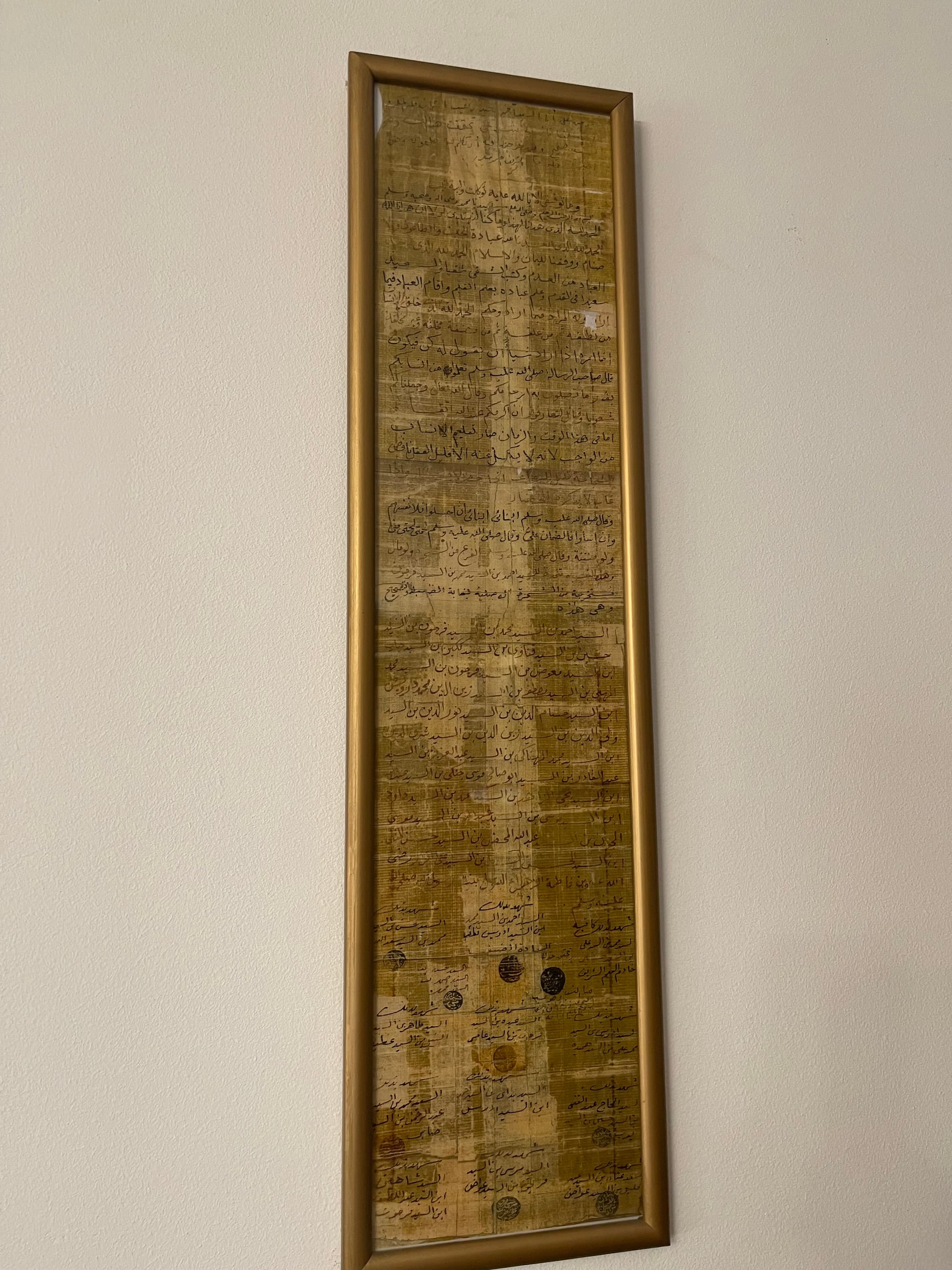
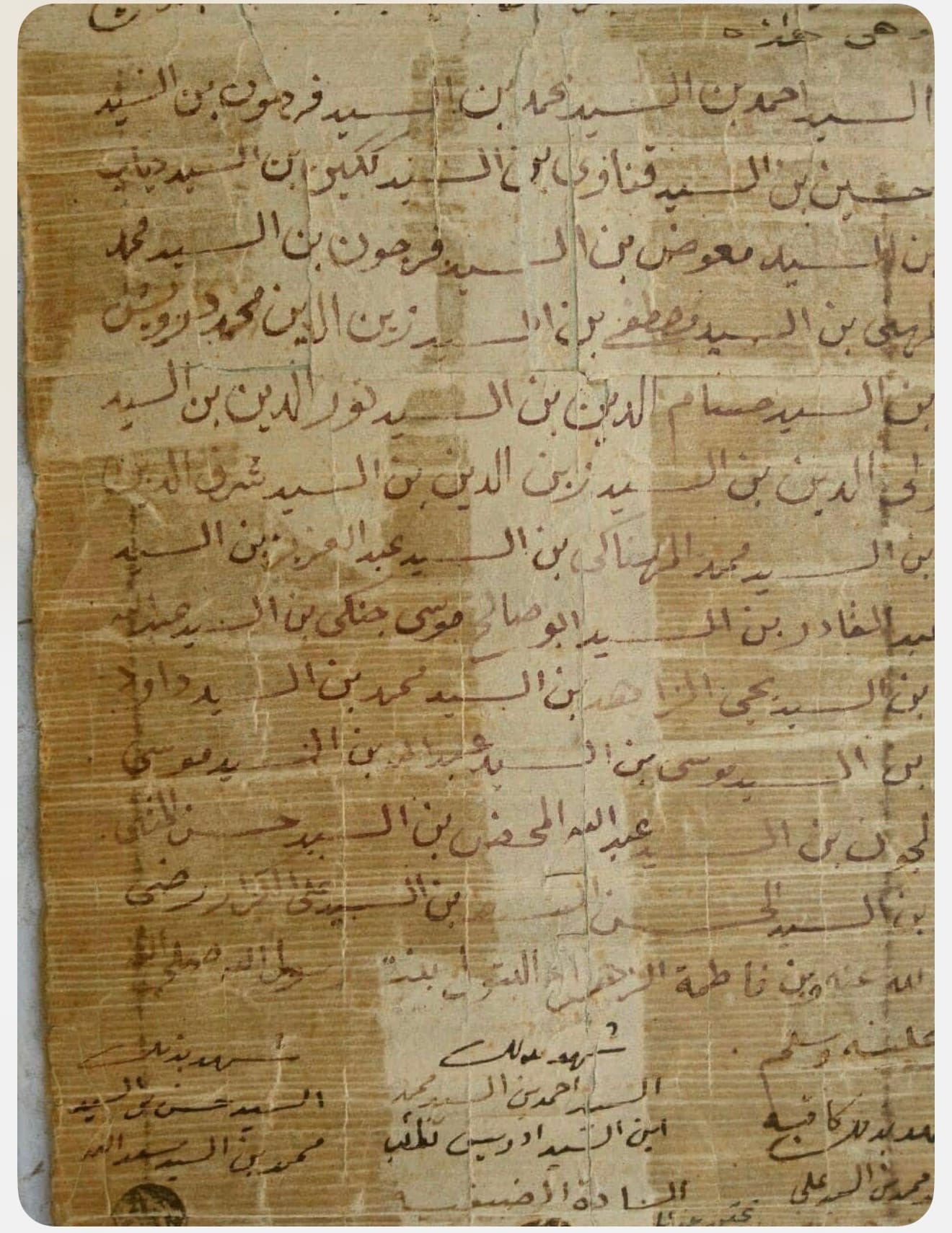
My mother's family carries a lineage claim stretching back to Hasan ibn Ali, the grandson of the Prophet ﷺ, through a line of shurafa who claim Prophetic descent and carry certificates attesting to it. This claim is socially meaningful and emotionally significant. It connects people to a history larger than any individual life; it creates a sense of continuity and significance that is genuinely important to those who carry it.
But I want to note that the claim, whatever its biological content, is primarily a narrative about identity rather than a biological fact. The certificate does not prove genetic descent in the sense that a DNA test would. It proves social, religious, and communal recognition of a claim to lineage.
My mother’s side of the family's sense of origin stretches across Morocco, Persia, Arabia, and Egypt—but none of those alone determines what we are. They were not, in any genetic sense, from the Nile Valley. They became Egyptian through residence, legal processing, and the slow accumulation of belonging that the 1929 nationality law eventually ratified. Their descendants are Egyptian today not because of what their DNA contains but because of a series of decisions that placed them inside the category.
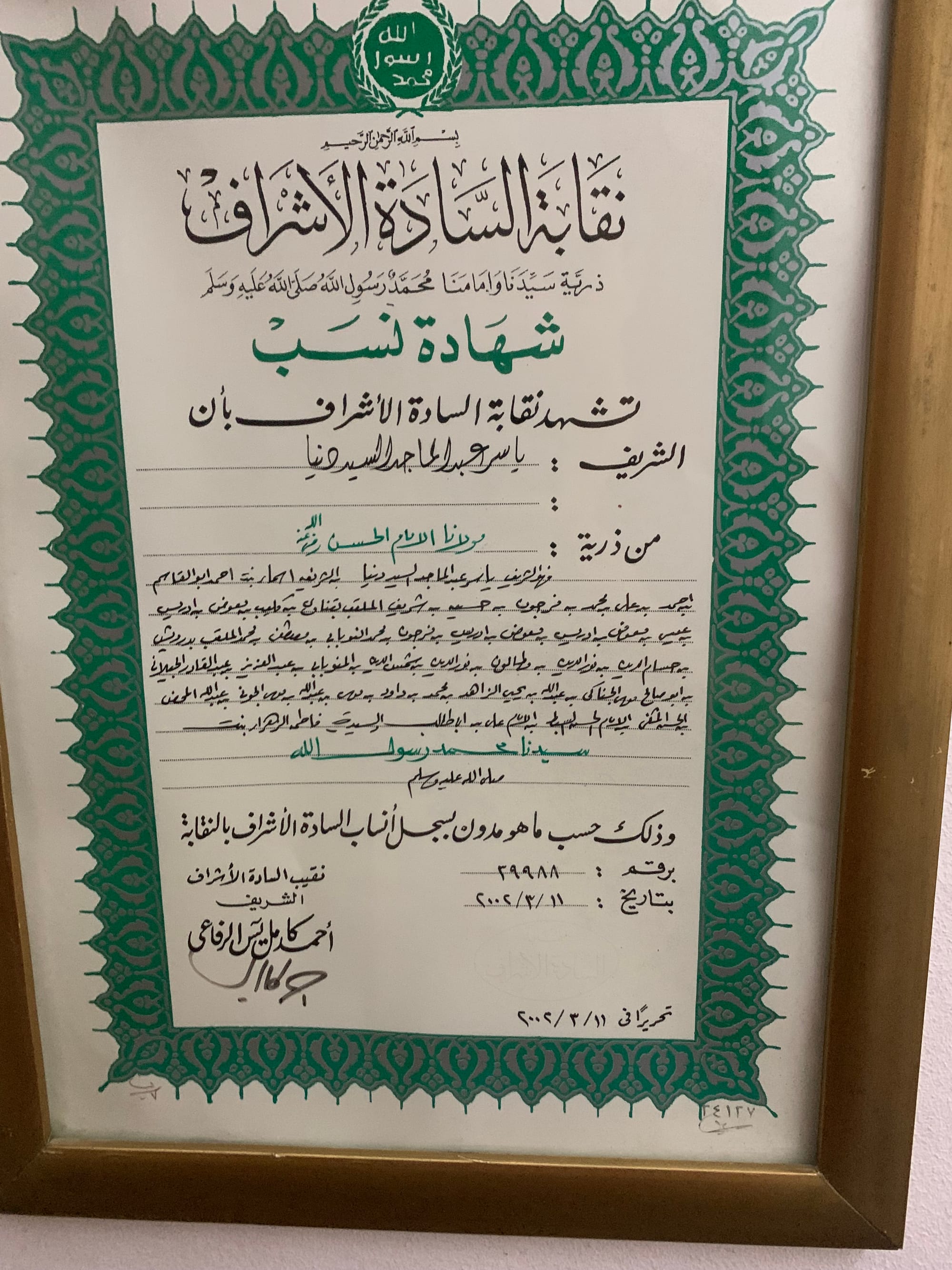
Egypt is not a genetic isolate. It is a genetic crossroads of Africa, the Mediterranean, and the Middle East that has absorbed, over millennia, influences from every direction its geography connects it to. This continuous mixing is part of what makes it impossible to use genetics as a stable foundation for national identity. Which mixing? How far back? Under what definition of "Egyptian"?
DNA can tell you where people came from. It cannot tell you who was allowed to stay.
The Contemporary Question
My son will grow up with Egypt in his background, but not necessarily in his life. He will be American in the way third-generation children of immigrants are American: fully and without qualification.
Is he Egyptian?
By blood—yes. By law—possibly, depending on whether I ever do the proper paperwork. By culture—probably not. By language—no. By memory—no.
The answer depends entirely on what we think "Egyptian" means.
The contrast across generations in my family is instructive. Umm Lolly was Egyptian through place and neighborhood and lived world. She did not need to be certified as Egyptian by any state because her identity was prior to the categories that would later make such recognition necessary. Her belonging was embedded in the network of neighbors who knew her and the physical space of the quarter she inhabited.
My grandfather was Egyptian through the state—through the institutions of modern Egypt that educated him, employed him, and gave him standing. His Egypt was institutional. His belonging was mediated by institutions rather than by direct communal life, but it was very secure, because the institutions were powerful and the criteria he met were the right ones.
My parents occupy the generation that made the permanent decision. My grandparents went to America temporarily, for a PhD, then they returned. My parents left Egypt for good. That difference is where Egyptian identity stops being the default frame and starts being something you have to decide what to do with.
What they did with it was carry it selectively, the way immigrants always do. Arabic was the language of the house. Egypt was the destination of summers. The food was Egyptian. The social world, at least early on, was built around other Egyptians who had made similar choices—people who had left but not entirely, who maintained Egypt as an identity even as they built American lives. I grew up speaking Arabic natively, watching Egyptian films, absorbing the specific texture of an Egyptian household transplanted to American soil. That transmission was real and deliberate.
However, I always felt American in Egypt. Every visit made this clear—not because I was unwelcome, but because Egyptians could tell. The way I moved, the references I made, the fact that when someone asked whether I preferred Egypt or America I said America, always, without hesitation.
What my parents transmitted, then, was not Egyptian identity intact. It was Egyptian identity in the process of becoming optional. They gave me the language. They gave me the summers, the food, the family network, the specific warmth and chaos of Egyptian domestic life. They gave me enough that I can claim it. But they could not give me what they no longer fully had themselves: the sense that Egypt was the frame, the center, the place that everything else was measured against.
That sense died somewhere in the permanent emigration. My great-grandmother had it completely. My grandparents had it, even through their American years. My parents carried a version of it, increasingly attenuated, into American life. By the time it reached me, it had become something I could feel but not quite inhabit—a belonging I inherited without the world that made belonging necessary. My belonging is fragile in ways that neither Umm Lolly's nor my grandfather's was, because it depends on the continued passing of cultural memory. This transmission degrades over distance and time and the pressure of other identities.
My son is Egyptian through ancestry alone. He has the genealogy but not the experience. With each generation, Egyptian identity becomes less lived and more abstract.
My marriage is part of this. My wife is of Pakistani heritage but was raised in America. The language of our home is English, and the cultural world our son will grow up in is American—Muslim in a specifically American sense, and hybrid in ways that do not map neatly onto either Egypt or Pakistan as discrete national identities.
This is not a loss. It is a transformation. The hybrid identity that my son will inhabit is its own thing, with its own richness and complexity. I don’t feel that he is missing something essential. I don’t feel the pull of a homeland that I need to transmit to him intact.
Egyptian identity, for me, is not something I feel the need to preserve.
This, too, is a historically specific position. My grandparents could not have imagined it. For them, being Egyptian was not optional; it was the framework through which everything else was understood. The idea that one of their grandchildren might simply let it fade—absorbed into a more diffuse American identity—would have felt like a loss too large to fully grasp.
My great-grandmother, who lived past one hundred, never fully understood why her grandchild had left. For her, Egypt was umm ad-dunyā—the mother of the world, the obvious place to be. America was cold and foreign. She died without quite comprehending the logic of emigration because her entire framework of meaning was organized around a place that her descendants had decided, for their own reasons, was optional. What she could not have known was that her certainty about Egypt was itself a product of the same narrowing I have been tracing. The Egypt she held as self-evident was the Egypt that had been made, not the one that had always been.
What remains when identity is inherited but not lived? There is the body: physical traits that mark me as coming from a particular part of the world. There is the name. There is the family narrative—the stories I have been tracing in this essay, the fragments that survived the transition from lived world to memory archive. There is an emotional trace: something that happens when I hear Arabic, when I see certain landscapes, when the smell of a particular combination of spices reminds me of my mother’s kitchen.
These things are real. But none of them organize my life the way Egyptian identity organized my parents’. They don’t determine where I work, whom I marry, what language I think in, or how the state classifies me. They are traces—occasionally powerful, but no longer load-bearing. Egyptian identity has become something I carry rather than something I inhabit.
Conclusion: The Story of Narrowing
The world my great-great grandmother inhabited did not ask who was truly Egyptian. It did not need to. In the Jewish quarter of Manshiyya, in the narrow streets near the Alexandrian port, you were your neighborhood; you were your network; you were the people who knew your name and the customs you shared with them. The question of national belonging was not yet the primary question, because the national was not yet the primary framework.
That world is gone—replaced, through a century of law, language, labor policy, and political violence, by an identity so thoroughly constructed that it came to feel natural.
And now, at the far end of that process, it has reached my son.
He will grow up American. He will know that his father's family is from Egypt, that this means something, that there is a language and a history and a set of stories attached to that fact. Whether any of it matters to him is genuinely not something I can predict, and not something I feel the need to control.
I do not know if my son is Egyptian. I do not know if he will remain Egyptian in any meaningful sense as he grows older, or whether he will even want to be. He may look at his heritage the way many third-generation Americans look at theirs: a point of occasional pride, a box to check, a story to tell at dinner when someone asks where his family is from. Or he may feel the pull of it more strongly than I do. Or he may feel nothing at all, and that will be fine too.
Umm Lolly did not need to ask whether she was Egyptian. The question would have made no sense to her. She was her neighborhood. She was the woman who went to Jewish funerals because that is what neighbors do, and who used a Judeo-Arabic word she had borrowed from the people next door, and who could not have imagined that this ordinary life would one day seem like history.
My son will inherit that story, or a fragment of it. He will inherit the name, the ancestry, perhaps a vague awareness that somewhere in his background there is a city on the Mediterranean and a family that goes back further than anyone properly documented. Whether that constitutes an identity is a question I cannot answer for him.
Egyptian identity was not discovered. It was made. My son will receive whatever is left of it. What he does with it is his own.
The sorting, for once, will be up to him.