
The Weapon That Doesn’t Stop
Cluster munitions don't discriminate by design. The law against them is real. The states that matter most never signed it — including ours.

Every morning, I open the Times of Israel. It has become a habit, maybe an unhealthy one. Most days the news settles into a grim routine. But a few weeks ago, something started catching my eye that I couldn't quite make sense of.
The reports kept describing the same strange phenomenon. Iran was firing ballistic missiles at Israeli cities, but the impacts weren't landing the way missile impacts are supposed to. A single launch would produce dozens of explosions, scattered across parking lots, rooftops, and commercial strips — not a point of destruction but a field of them. Witnesses described it as if the sky had fractured. The phrase "cluster bombs" kept appearing in the coverage. I had not heard the term before.
So I started looking into it.
What I found was an argument — about military necessity, international law, and the gap between what states condemn and what they quietly produce, transfer, and use. The more I read, the more I understood that cluster munitions aren't a niche topic for arms control specialists. They are a window into something much larger: how we reason about violence when it serves us, and how quickly that reasoning bends.
The video that finally made the technical real was filmed from a sidewalk — shaky, disorienting. There's no single explosion, no defining blast that marks the moment. Instead, there are dozens. Small, sharp bursts, scattered across a neighborhood. They come almost at once, but not quite. A ripple. You find yourself replaying it, trying to understand what you're seeing.
Where is the target?
Then you realize: the ripple is the point.
This is a missile that did exactly what it was designed to do. It was fired, and instead of delivering a single warhead, it released dozens of smaller ones. Each one found its own path and became its own explosion.
What you are watching is not just a strike. It is a system. A way of turning an entire area into a target.
How the Weapon Works
Cluster munitions are often described in moral language — indiscriminate, controversial, banned — but before any of that, they are an engineering solution to a specific problem: how to multiply destructive effect without increasing payload size.
The basic mechanism is straightforward. A parent carrier — a bomb, artillery shell, or ballistic missile — travels toward its target. At a pre-programmed point, determined by altitude, velocity, and trajectory, the carrier opens. Inside are submunitions: dozens, sometimes hundreds of small bomblets. A dispersal system ejects them outward in a pattern governed by physics.
In older systems, this meant saturating a battlefield. An artillery shell, for example, might open midair and spread dozens of bomblets across an area roughly the size of a few city blocks. Larger rocket systems can spread hundreds of them over an even bigger zone. The logic was simple: if targets are dispersed, a single explosion is inefficient. Many smaller explosions are not.
These systems were developed during the Cold War, when both NATO and the Warsaw Pact planned for massive conventional engagements across Europe. Cluster munitions were optimized for exactly that scenario — stopping armored columns, degrading airfields, suppressing troops spread over wide terrain. They were never really designed with cities in mind. That distinction would matter later.
What has changed today is where this original logic is applied.
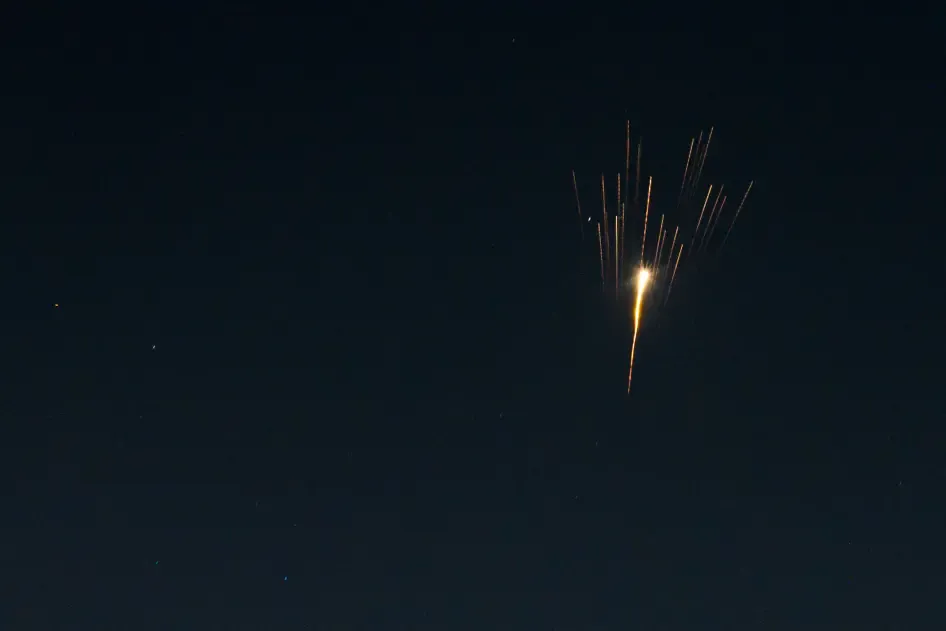
Cluster warheads are now being integrated into medium-range ballistic missiles — including systems from Iran's Khorramshahr family, among others. These are not battlefield tools in the traditional sense. They are strategic weapons, designed to travel hundreds or thousands of kilometers, re-enter the atmosphere at high speed, and deliver payloads onto cities, infrastructure, and military installations. In this configuration, the dispersal event happens during the terminal phase of flight. As the missile descends, its warhead opens at an altitude of roughly 7 to 10 kilometers. The internal mechanism spins, ejecting between 20 and 80 submunitions into space. Each continues on a ballistic trajectory toward the ground, spreading across a footprint that can extend several kilometers in radius.
The result is that one tracked object becomes dozens. That transformation matters because it changes not only what the weapon does on the ground, but how it interacts with everything designed to stop it.
The Weapon and the Shield
Modern missile defense systems — whether Israel's layered architecture of Iron Dome, David's Sling, and Arrow, or U.S. systems like THAAD and Patriot — are built around a fundamental assumption: that incoming threats are discrete.
A radar detects an object. A tracking system predicts its trajectory. An interceptor is launched to meet it. The engagement is calculated, timed, and executed against a single target.
Cluster warheads break that logic at the moment it matters most.
As long as the missile remains intact, it behaves like any other ballistic threat. It can be tracked, engaged, and — if everything works — destroyed. But the moment the warhead opens, the problem changes entirely.
The first issue is object proliferation. One target becomes dozens. Even if the radar can see them all, each submunition now represents a separate object requiring its own engagement. The number of interceptors needed multiplies instantly.
The second is radar cross-section. A large reentry vehicle is relatively easy to detect and track. A submunition, often weighing less than five kilograms, is harder to lock onto, especially when surrounded by debris from the parent carrier.
The third is the most decisive: the timing problem.
If the intercept happens before dispersal, the system works. If it happens after, it has effectively failed. Once the warhead has opened, the submunitions are already on their way. Destroying the remnants of the missile does little to stop what has already been released. Several defense analysts have noted that once the cluster payload opens, interception becomes far less effective. In other words, the defender is no longer stopping a weapon, only cleaning up after one.
This forces defenders into a painful position. They must intercept early, at high altitude, often outside the atmosphere, using the most advanced and expensive systems available. Waiting too long means losing the ability to stop the attack in any meaningful way.
And this is where the economics become a strategy in themselves.
An Arrow-3 interceptor costs several million dollars. A submunition costs a fraction of that — often in the thousands. The attacker pays once to launch a missile that becomes dozens of threats. The defender must either intercept early, at great expense, or attempt to engage a swarm of smaller objects that are far harder to track. Repeat this across a sustained campaign, and the interceptor stockpile begins to erode.
Indiscrimination is not an accidental byproduct. It is the mechanism.
The Strategic Shift
In the recent conflicts between Iran and Israel, this logic has been operationalized in a way that marks a genuine inflection point in how cluster munitions are used.
They are no longer secondary tools for area suppression on a conventional battlefield. They have become primary instruments for air defense saturation — a means of exploiting the structural vulnerabilities of even the most sophisticated defensive architecture. This shift is not unique to Iran. It reflects a broader evolution in how multiple states are adapting older weapons to new strategic problems.
Iran's deployment of cluster-armed ballistic missiles reflects a deliberate attempt to force Israel into a losing calculation. The goal is not precision. It is saturation. Make interception economically and logistically unsustainable. Force the defender to win individual engagements while losing the broader contest.
Reports from early this year indicate that this strategy has had measurable effects. Outside analyses warned that Israel's Arrow interceptor stocks were being heavily depleted, and as available interceptors diminished, the percentage of incoming threats reaching populated areas increased. Not because the missiles became more accurate. Because the defenses became exhausted.
In one verified strike in Ramat Gan, dozens of submunitions impacted a wide commercial district in near-simultaneous bursts. An elderly couple was killed in their apartment. CCTV footage showed exactly what the sidewalk video suggested: not a single point of impact, but a pattern — deliberate, engineered, effective.
The weapon had worked exactly as intended.
At some point, the technical explanation stops being neutral. The feature engineers describe as "object proliferation" is the same feature that makes the weapon morally difficult to contain. The system works by multiplying targets. But that multiplication is not selective. It does not ask who is standing where. And once that becomes clear, the question shifts. It is no longer just how the weapon works. It is whether it can be used without exceeding the limits we claim to accept.
The Law and Its Limits
It turns out that there is a law against this.
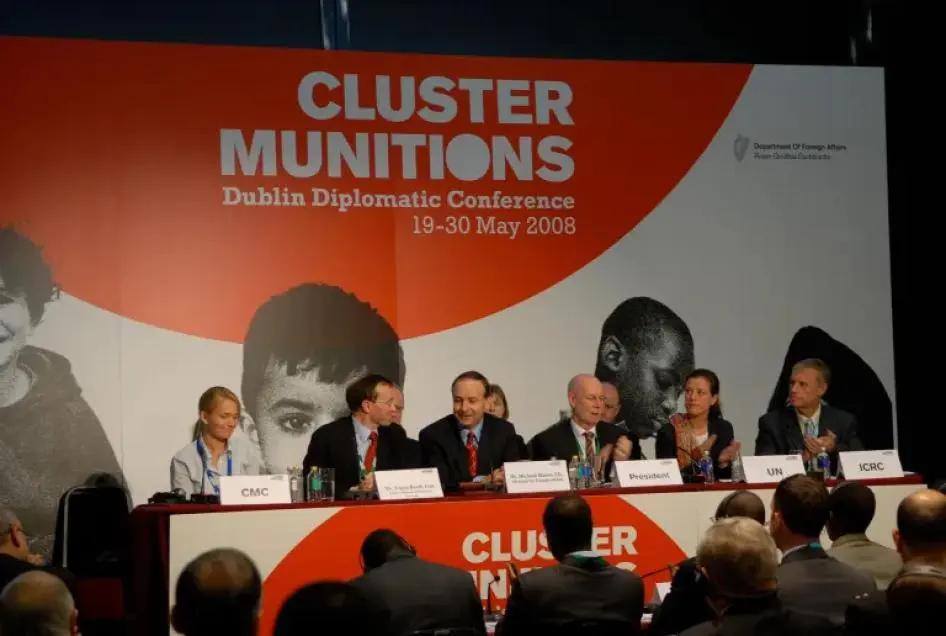
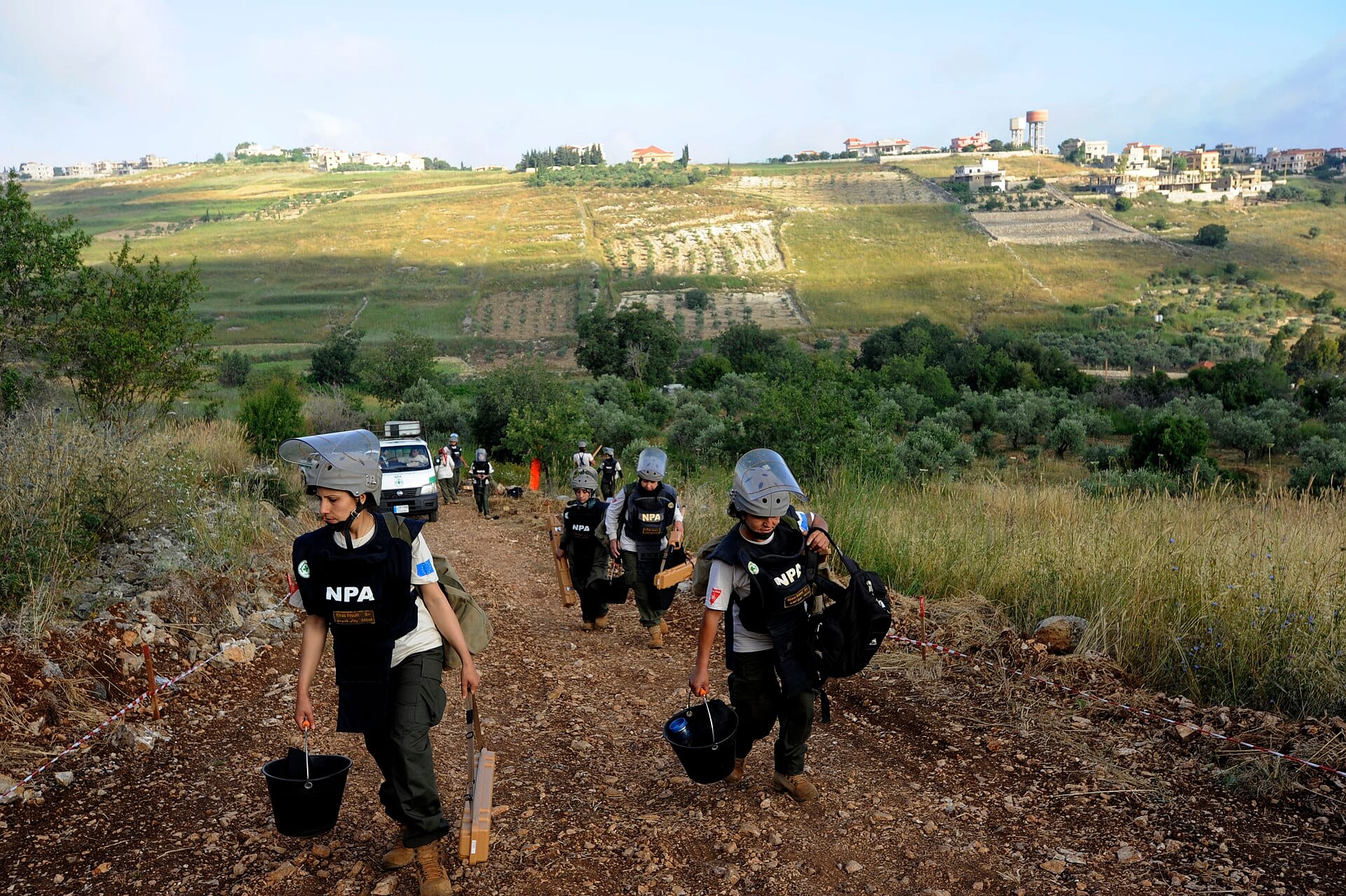
The Convention on Cluster Munitions (CCM), adopted in Dublin in May 2008, represents a major humanitarian effort to prohibit a class of conventional weapons, following earlier bans on chemical weapons, biological weapons, and landmines. It bans the use, production, transfer, and stockpiling of cluster munitions. It requires the destruction of existing stockpiles within eight years, the clearance of contaminated land, and assistance to victims.
The rationale is twofold. During an attack, cluster munitions disperse over wide areas, making it difficult or impossible to distinguish between military and civilian targets. After an attack, a significant percentage of submunitions fail to detonate — often between 10% and 40% in real-world conditions — remaining as unexploded ordnance that can injure or kill long after the conflict ends. The treaty holds that this combination of immediate and long-term harm, taken together, renders the weapon categorically unacceptable.
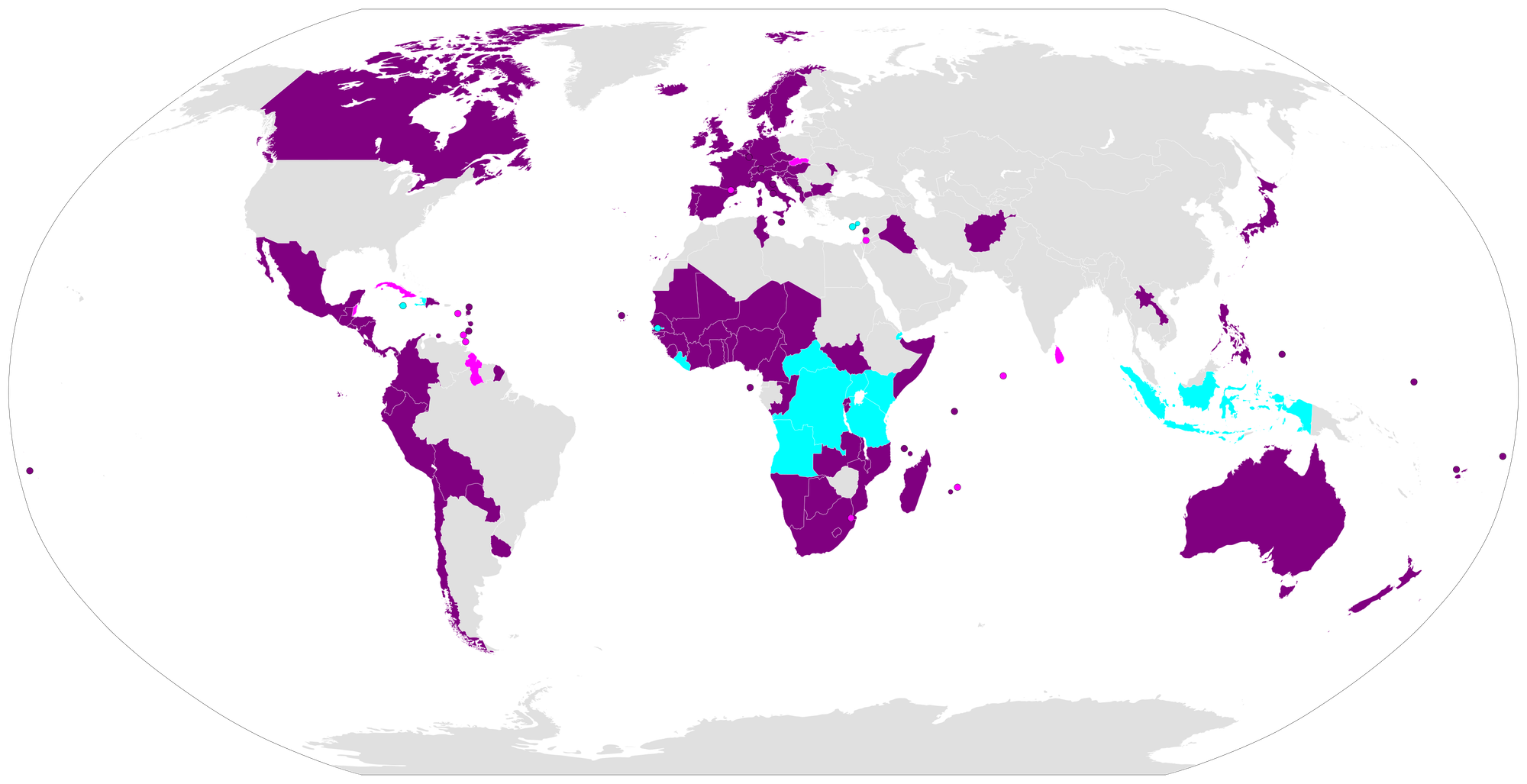
112 states have committed to the convention. It has shaped procurement decisions, stigmatized production, and generated real diplomatic pressure.
However, the treaty has a fundamental problem. The states that matter most have never signed it.
The United States, Russia, China, Israel, Iran, Saudi Arabia, the UAE, India, and Pakistan all remain outside the convention. Their position is consistent: cluster munitions have unique military utility, effective against dispersed targets, armored formations, and air defense systems. No alternative, they argue, provides the same combination of coverage and efficiency. And so they decline to be bound.
What results is a divided world: a norm that is widely endorsed but selectively applied. The gap between law and reality is a moral failure.

The Historical Record
If the contemporary case is complicated by competing strategic claims, the historical record is not. Cluster munitions have been used across multiple theaters over several decades, and the pattern is remarkably consistent: wide-area effect during conflict, long-term civilian harm afterward. Each chapter added more pressure to adopt the CCM. Each chapter was then set aside when the next conflict made the weapons useful again.
Lebanon, 2006. In the final days of the war, Israeli forces fired an estimated four million submunitions into southern Lebanon. Roughly one million failed to detonate. The war ended; the weapon did not. This was the predictable outcome of the weapon's design. Fields, roads, and villages remained contaminated for years. Farmers could not return to their land. Many of the injuries occurred after the initial strike — when a child picked up something that looked like a toy. Entire communities were reshaped by ordnance that continued to act long after it was deployed. The situation in Lebanon became one of the major catalysts for the CCM.

Yemen, 2015–2017. The Saudi-led coalition used cluster munitions in multiple documented strikes, deploying U.S.-, U.K.-, and Brazilian-manufactured systems. The targets were described as military. The effects were not contained to them. Amnesty International and Human Rights Watch documented civilian casualties, contaminated farmland, and the familiar residue of unexploded ordnance in villages nowhere near any legitimate target.
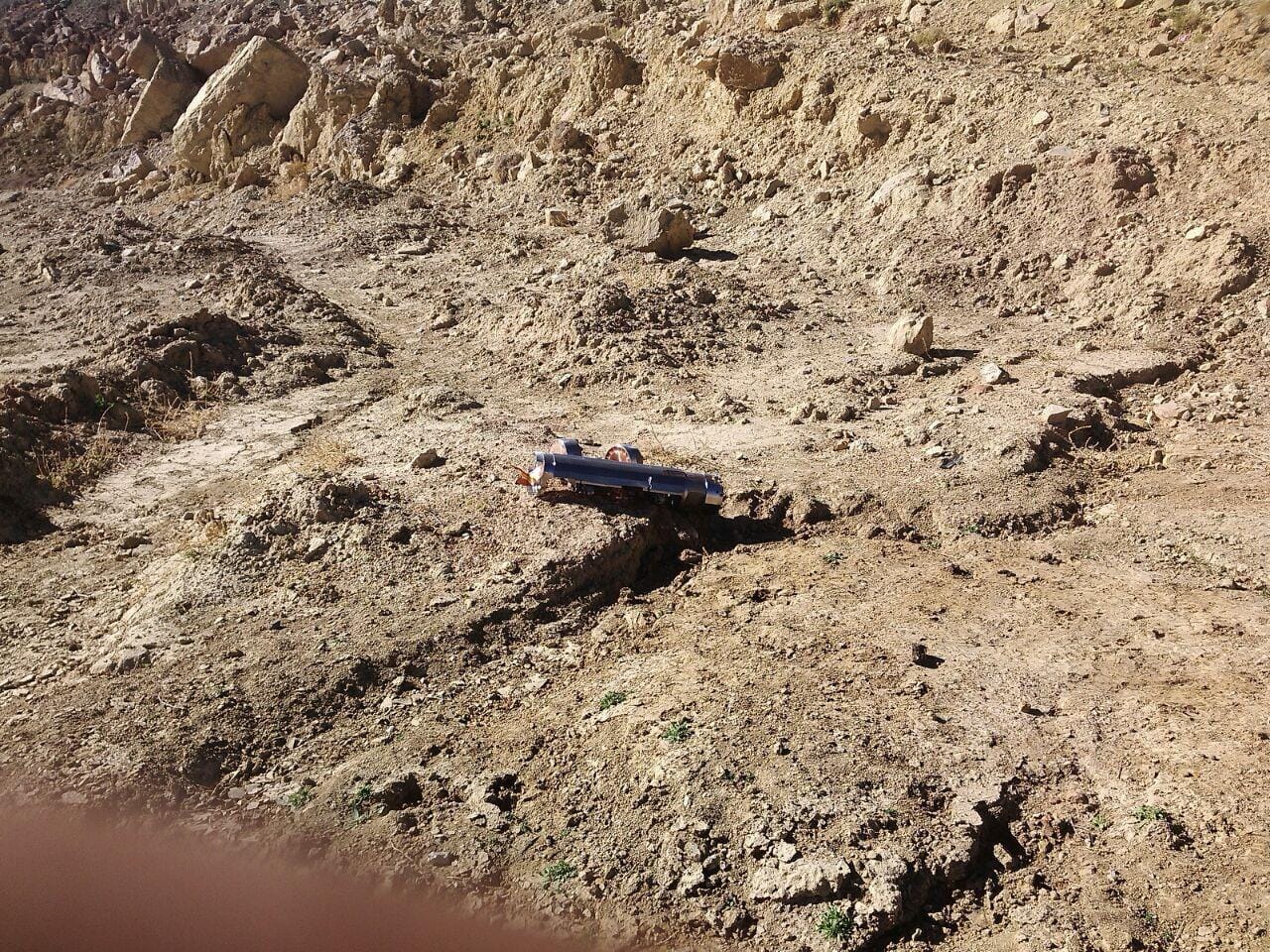
Ukraine, 2022–present. At the outset of the war, Russia's use of cluster munitions was widely condemned in Western commentary as a potential war crime. Then, as the conflict extended into attritional trench warfare and Ukrainian forces faced fortified Russian positions, the logic shifted. The United States transferred its own cluster munition stockpiles to Ukraine in 2023. The official rationale was specific: Russia had already been using them, Ukraine was fighting defensively on its own territory, and conventional artillery stocks were dwindling. These were presented as exceptional circumstances justifying a policy exception.
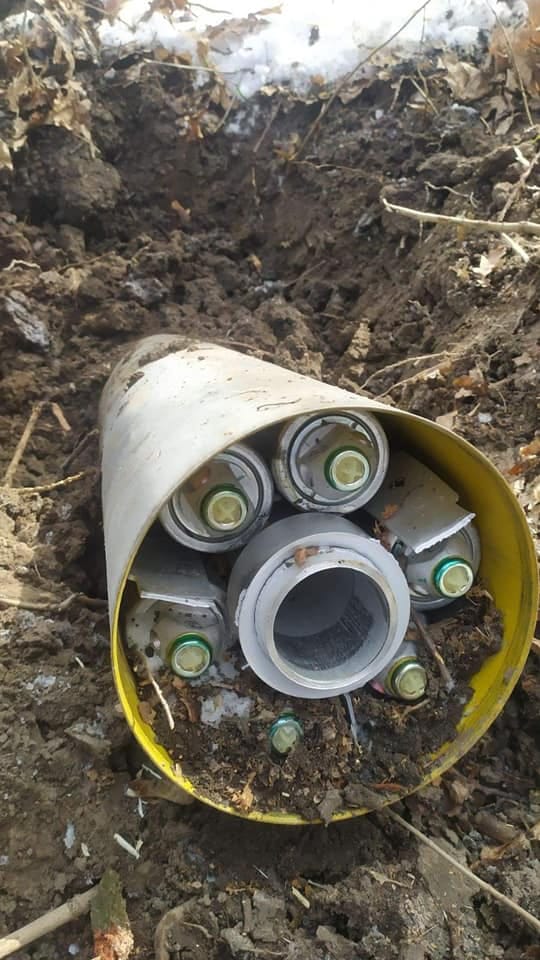
.jpg?ref=texani.org)
Perhaps they were. But the effect was the same: what had been condemned became, under sufficient pressure, justifiable. The weapon did not change. The context did. Once a category of exception exists, it tends to expand.
The clearest measure of that expansion came in 2024, when Lithuania became the first state party to formally withdraw from the CCM. The rationale was straightforward: its security situation had changed, and the treaty was incompatible with what it now believed it needed to stockpile for territorial defense. A state that had accepted the norm concluded the norm could not survive contact with a serious threat. The withdrawal did not generate the condemnation one might expect. It was treated, largely, as understandable.
In each case, the moral status of the weapon was shaped by who was using it and why. But if the ethical judgment depends on the user rather than the weapon, then what looks like a moral position is actually something else entirely.
It is an expression of allegiance.
The Problem of "Better" Weapons
One of the most persistent arguments in defense of cluster munitions is that the technology has genuinely improved.
Modern systems, manufacturers claim, have significantly lower dud rates. Advanced fuzing mechanisms are designed to ensure detonation on impact. Some systems include self-destruct or self-neutralization features intended to eliminate the unexploded ordnance problem entirely. The XM1208, an advanced munition currently in U.S. development, contains nine submunitions each designed to release roughly 1,200 tungsten fragments, marketed with a projected failure rate below 1%.
On paper, these claims are meaningful. A dud rate below 1% sounds categorically different from historical rates of 10% to 40%.
However, the gap between lab conditions and battlefield reality is huge. In Lebanon in 2006, munitions claimed to have failure rates below 1% were found in practice to have rates closer to 10%. Environmental factors affect fuze performance in ways that controlled testing does not replicate. The gap between design and deployment is a consistent pattern.
Even if the technology worked exactly as advertised, the underlying problem would remain.
A cluster munition with a 1% failure rate still disperses multiple explosive devices across a wide area and still makes precise discrimination between combatants and civilians structurally difficult when used on cities. The improvement addresses one dimension of the harm while leaving the defining feature of the weapon entirely intact.
This is where language does important work. Older systems are described as "dumb," indiscriminate, unacceptable. Newer systems are described as "smart," controlled, refined. A moral distinction is drawn between versions of the same weapon. A tiered legitimacy emerges. Some cluster munitions, we are told, are now acceptable.
But the feature that defines the weapon has not changed.
The technology has improved. The structure has not.
Who Still Makes Them
Despite this controversy, the production of cluster munitions is active globally.
In the U.S., our government awarded a contract to Tomer, an Israeli state-owned manufacturer, to produce advanced cluster munitions, with a reported initial purchase of around $210 million. This is a forward investment, premised on the argument that lower dud rates constitute a different and therefore acceptable category of weapon.
In Israel, Tomer continues to develop cluster systems, including for artillery and rocket applications. In Russia, the Smerch rocket launcher and the Iskander ballistic missile continue to deploy cluster payloads on Ukraine. In Iran, production is managed through state-linked organizations including the Aerospace Industries Organization and the IRGC's aerospace division — the result being the kind of ballistic platforms now delivering cluster payloads over Israeli cities.
The convention has failed to stop production and instead displaced it into enterprises less exposed to reputational pressure, less visible supply chains, and systems reclassified as "advanced" or "precision-enhanced.” No major power stands outside this system.
The Moral Claim
The question I am ultimately interested in is not just whether these weapons are legal under international law. It is whether they are morally acceptable within the Islamic tradition.
As I’ve written before, Islamic ethics on the conduct of war are require discrimination: the ability to distinguish between combatants and civilians and to direct force accordingly. They require proportionality: that civilian harm not be excessive relative to the military advantage sought. And the prohibition against transgression is a binding moral limit, regardless of what the adversary does.
Cluster munitions are difficult to reconcile with these requirements. They operate by dispersal across areas larger than most legitimate military targets in urban environments. They cannot reliably distinguish between combatants and civilians once deployed. And they create lingering hazards that continue to harm civilians long after the initial attack.
A weapon whose effects cannot be contained within the bounds of moral discrimination is morally unstable in any hands. It pushes those who use it toward transgression — by design.
When It Serves You
The easiest moral positions are the ones that align with your interests.
It is easy to condemn cluster munitions when they fall on your cities, when the footage is yours, when the victims speak your language. It is considerably harder when the same weapon offers a tactical advantage to people you feel bound to — politically, emotionally, or religiously.
This is where most arguments collapse.
The justification is familiar: the enemy is stronger, their defenses are advanced, cluster warheads offer a way to overcome asymmetry and make deterrence credible. At a purely technical level, this is not wrong.
They work.
That is what makes them tempting.
But if effectiveness is allowed to define permissibility, there is no meaningful limit left. Every weapon can be justified under the pressure of necessity. Every escalation becomes thinkable. The category of "impermissible" shrinks until it disappears.
The question is not whether cluster munitions can serve a just cause. They can. The question is whether a cause can remain just once they are used.
If the answer is yes — if anything that advances the cause is acceptable — then our morality becomes purely performative. It describes preferences, not obligations. It is strategy dressed in ethical language.
Our American Position
To write this from the United States is to stand inside the system one is describing.
My beloved country, my home, is not a signatory to the CCM. It has defended the legality of these weapons under the framework of distinction and proportionality. It has transferred them to allies in active conflicts. It is actively reinvesting in advanced variants as we speak.
At the same time, it participates in a global discourse that condemns the use of these weapons by adversaries — where the language is clear: indiscriminate, unlawful, terror. When the U.S. develops or transfers equivalent systems, the language shifts: advanced, necessary, effective, controlled. The same weapon is described differently depending on who deploys it.
The difference is not in the weapon. It is in the framing.
Human Rights Watch, which has condemned Iran's use of cluster munitions as potentially constituting war crimes, has also criticized the United States for reinvesting in the same class of weapons. The moral assessment is consistent across actors. The public conversation is not.
This inconsistency matters. When our military, the most powerful in the world, declines to be bound by the convention while condemning adversaries who use equivalent systems, the norm does not hold. It becomes a tool of political differentiation rather than a genuine moral constraint. To take a consistent position is to resist selective application. That position will not always sit neatly in wartime.
That discomfort is a sign that the position is honest.
Pragmatism, Reconsidered
If the moral argument is to hold, it cannot ignore the reality of war.
States face genuine threats. They defend themselves under pressure, with incomplete information and limited options. It is not enough to say that a weapon is wrong. One must also say what restraint actually requires, and what it costs.
The fear, often unspoken, is that rejecting certain weapons means accepting vulnerability. That restraint is a luxury available only to the secure. That in a world where adversaries are willing to use any means necessary, declining to do so is a form of self-imposed disadvantage.
There is truth in this concern.
Pragmatism does not require the abandonment of ethical constraints. It requires choosing which constraints you are willing to live within and which costs you are willing to bear. In practice, this means prioritizing systems that preserve discrimination: precision-guided munitions, targeted strikes, improved defensive technologies. It means investing in interception capacity, infrastructure hardening, and civil defense. It means accepting that not every target can be hit at every moment, and that not every tactical advantage can be pursued.
It also means recognizing something the short-term calculus tends to obscure: weapons shape the conflicts in which they are used. Cluster munitions do not simply produce immediate effects and then become inert. They alter the moral landscape by shifting expectations about what is acceptable.
The fragments left in southern Lebanese soil in 2006 were still injuring farmers a decade later. The normalization of cluster munitions in the Ukraine conflict contributed directly to their strategic integration into the ballistic platforms now being used against Israeli cities. These decisions are part of a chain.
What We Refuse
The video is easier to understand now.
The pattern is no longer confusing. It is legible. You can see the dispersal, the spacing, the physics behind each impact. You can estimate what altitude the warhead opened. You understand why the defenses struggled. You understand the system.
And that understanding does something unexpected. It removes the illusion that what you are watching is chaos.
It is not chaos. It is design.
Which means the question is not what happened. The question is whether this is acceptable in the specific situations where it matters most: when the weapon works, when it offers an advantage, when it serves a cause you believe in.
That is where the line has to be drawn.
Not every weapon that can be used should be used. Not every advantage should be taken. A just cause is not made just by its goals alone. It is shaped, sometimes undermined, by the means it allows itself.